

Did you know that a roof covered in moss can retain up to 20 gallons of water per 100 square feet? This isn’t just a cosmetic problem; it’s a heavy, damp blanket that accelerates the wear of your tiles and can even lead to structural damage during winter freeze-thaw cycles. If you’re looking for effective roof moss removal, you’ve likely encountered a sea of conflicting advice that leaves you more confused than when you started.
It’s completely understandable to feel hesitant when choosing a method, especially with so many contractors offering quick fixes that could crack your slates. You want your home to look its best, but you don’t want to risk the integrity of your roof in the process. We’ve seen too many property owners deal with the aftermath of aggressive pressure washing or ineffective DIY treatments that often make the problem worse.
In this article, you’ll discover why common cleaning shortcuts are actually destroying roofs and learn the professional standard for long-term protection. We’re debunking five dangerous myths for 2026 and providing a clear, safe path to a moss-free home. You’ll gain the knowledge to choose the right professional service or tackle the issue safely without risking your biggest asset.
Key Takeaways
- Understand how moss acts as a “structural sponge” that threatens your home’s integrity by holding excessive moisture.
- Discover why high-pressure cleaning often causes more harm than good by stripping protective layers from your tiles.
- Learn why professional roof moss removal requires a biocide treatment to kill microscopic roots and prevent immediate regrowth.
- Identify the three critical stages of a specialised roof restoration to ensure your property remains protected against the Edinburgh climate.
- Gain the confidence to distinguish between damaging “quick fixes” and the professional standards required for long-term maintenance.
Understanding Roof Moss: Why Edinburgh Homes are Prime Targets
Edinburgh’s architectural beauty is undeniable; however, our local climate provides the perfect breeding ground for unwanted biological growth. Biologically, mosses are non-vascular plants that thrive in high-humidity environments. Because Edinburgh experiences frequent rainfall and coastal mist, moisture often remains trapped on roof surfaces for extended periods. This dampness isn’t just a nuisance; it’s the primary fuel for a moss infestation that can compromise your home’s structural integrity.
Whilst every property is at risk, north-facing roof slopes are particularly vulnerable. These areas receive significantly less direct sunlight, meaning they rarely dry out completely between rain showers. When you combine this persistent moisture with shade from overhanging trees or a buildup of organic debris, you create a self-sustaining ecosystem. Surrounding trees act as a “seed source,” dropping spores and leaves that provide the nutrients moss needs to flourish and spread across your tiles.
The Biology of a Roof Infestation
Moss doesn’t just sit on top of your roof; it actively anchors itself. Microscopic spores travel through the air and settle into the tiny gaps between your tiles or the porous surface of concrete and weathered slate. Once established, the plant develops “rhizoids.” These root-like structures grip the tile surface, pulling in moisture and nutrients. This growth is often a symptom of a larger moisture problem. If you notice thick clumps, it’s a sign that your roof is retaining water rather than shedding it, which is why professional roof moss removal is so vital for long-term protection.
Why 2026 is a Turning Point for Roof Care
As we move through 2026, we’re seeing increasingly erratic Scottish weather patterns. Warmer, wetter winters mean that moss regrowth cycles are accelerating, making traditional “once-a-decade” cleaning obsolete. Homeowners are now prioritising preventative maintenance over reactive, expensive repairs. There’s a clear industry shift away from aggressive scraping toward advanced biocide treatments. These eco-friendly solutions don’t just clear the visible growth; they sanitise the surface to kill remaining spores. At Ultimate Clean Solutions, we provide a roof moss removal service that focuses on these modern standards. If you’re concerned about your roof’s condition, our team offers a free same-day quote to help you plan your maintenance without any pressure or guesswork.
Myth 1: “Moss is Just an Aesthetic Issue and Won’t Cause Damage”
Many homeowners in Edinburgh view a green roof as a rustic, natural aesthetic. However, this is a dangerous misconception. Moss isn’t just a surface-level eyesore; it acts as a “Structural Sponge” that actively degrades your property. Because moss lacks a traditional root system, it survives by absorbing incredible amounts of moisture directly from the air and rainfall. Specifically, moss can absorb up to 10 times its own weight in water. This creates a heavy, damp layer that never truly dries out in the Scottish climate.
When winter arrives, this trapped moisture becomes a serious liability through the freeze-thaw cycle. As the temperature drops, the water held within the moss clumps expands. This expansion exerts immense pressure on your tiles, often cracking them from the inside out or causing the protective surface to delaminate. Additionally, moss facilitates a process known as capillary action. It acts like a biological wick, pulling water upwards and underneath the overlapping edges of your tiles. Once water reaches the underlying roofing felt and timber battens, you face the risk of rot and expensive internal leaks. Effective roof moss removal isn’t about vanity; it’s about stopping this silent structural decay before it requires a full roof replacement.
The Hidden Threat to Your Gutters
As moss grows, it becomes heavy and eventually loses its grip on the tiles. Large, saturated clumps often slide down the roof during heavy rain, landing directly in your drainage system. These “moss bombs” are a leading cause of severe blockages in downpipes and valleys. If you ignore the growth on your tiles, you’ll likely find yourself needing frequent gutter unblocking to prevent water from overflowing and damaging your masonry. Maintaining a clean roof serves as your first line of defence, ensuring your entire drainage system functions exactly as intended.
Weight and Structural Integrity
The sheer weight of a saturated roof is often underestimated. According to industry data, a roof covered in thick moss can retain between 18 and 20 gallons of water per 100 square feet. For older Edinburgh tenements and Victorian properties, this added stress on aged timber supports can be significant. The constant weight, combined with the moisture-induced rot of battens, can lead to sagging or tile displacement. Consequently, what starts as a few green patches can quickly escalate into a need for gutter repair Edinburgh or even structural timber work. If you’re unsure about the state of your tiles, our team can provide a professional roof cleaning assessment to identify these hidden risks early.
Myth 2: “Pressure Washing is the Best Way to Get a Clean Roof”
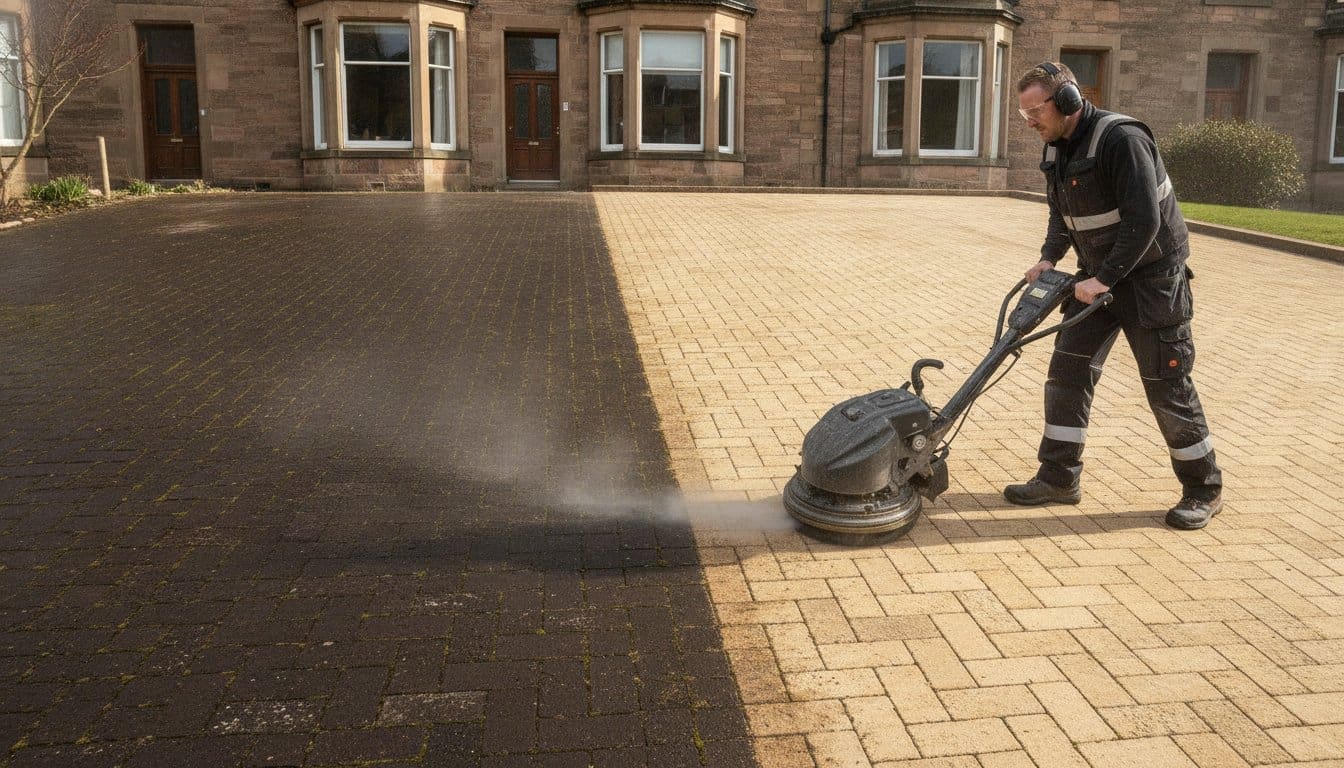
Pressure washing is often the first method homeowners consider because it offers immediate visual satisfaction. However, using high-pressure water on delicate roof surfaces is a significant mistake. Traditional slate and concrete tiles aren’t designed to withstand the force of industrial pressure washers. High-pressure streams can easily crack older slates or dislodge them entirely, leading to structural vulnerabilities.
For concrete tiles, the “Granule Loss” problem is even more severe. These tiles have a factory-bonded layer of mineral granules that protect the concrete from UV rays and weathering. Pressure washing strips this layer away, which significantly shortens the lifespan of your roof. Additionally, you risk “Water Ingress.” Because the water is forced at high speed, it can easily blow past tile laps and into your loft space, causing damage to insulation and ceiling plaster. Instead of physical force, a modern softwashing Edinburgh approach uses chemistry to achieve a deeper, safer clean.
The Short-Term Gain vs Long-Term Pain
Whilst a pressure-washed roof looks pristine initially, the results are usually short-lived. Aggressive water doesn’t just remove moss; it scours the tile surface and opens up microscopic “pores.” These newly exposed cavities provide the perfect sheltered environment for wind-blown spores to settle. Consequently, moss often returns faster and thicker than before, sometimes within just six to twelve months. There’s also a structural risk during high-pressure exterior cleaning. If the operator isn’t careful, water can be forced into the wall cavity or behind the soffits, leading to damp issues that are difficult to resolve.
Professional Alternatives: Steam and Softwash
The industry standard for 2026 has moved toward gentler, more intelligent methods. For particularly delicate or heritage surfaces, steam cleaning Edinburgh provides an excellent alternative. Steam uses high temperature rather than high pressure to break the bond between the moss and the tile without causing mechanical damage.
For most residential properties, we recommend a combined strategy:
- Manual Scrape: Gently removing the bulk of the growth using specialised tools that match the tile profile.
- Softwash Application: Applying eco-friendly, biodegradable biocides at low pressure.
- Biological Kill: The solution penetrates the tile to kill moss at the root level, ensuring it doesn’t return.
This “gentle” methodology is almost always more effective for roof moss removal because it prioritises the long-term health of your tiles. By avoiding forceful impact, you ensure your roof remains watertight for years to come. If you’re concerned about the safety of your tiles, our team is happy to provide a free same-day quote to assess the best roof moss removal method for your specific property.

Myth 3: “Scraping the Moss Off is Enough to Stop it Returning”
Many property owners assume that once they clear the visible green clumps, the problem is solved. Unfortunately, this is a major misunderstanding of the biology involved. Physical scraping only targets the “fruiting body” of the plant. It leaves behind microscopic roots, called rhizoids, which anchor themselves deep within the porous surface of your tiles. Because Edinburgh roofs often feature aged slate or concrete, these rhizoids find plenty of tiny cavities to hide in, making them nearly impossible to remove by hand alone.
This approach often leads to the “Lawnmower Effect.” Just as cutting grass encourages it to grow back thicker, removing only the top layer of moss can stimulate the remaining roots to regrow with more vigour. Without a chemical treatment to neutralise the biological source, you’re essentially just pruning your roof. For a detailed explanation of why this process fails over the long term, see our guide on Roof Moss Removal: Why Scrapping Isn’t Enough.
Microscopic Spores: The Invisible Enemy
Millions of spores remain in every tile crevice even after the most thorough scrape. Edinburgh’s persistent moisture provides these spores with everything they need to thrive. Consequently, homeowners who rely on scraping alone often find themselves repeating the process every year. A professional biocide after-treatment is the only way to break this cycle. This eco-friendly solution sterilises the roof and provides a protective barrier that remains active for up to 24 months. It ensures that your roof moss removal efforts actually last rather than becoming an annual chore.
The Danger of DIY Roof Access
Safety is paramount. Beyond the biological challenges, manual scraping presents significant physical risks. Walking directly on roof tiles is the most common cause of broken coverings we see in the field. Older slates and concrete tiles become brittle with age and cannot support the concentrated weight of a person. Professional roof cleaners use specialised equipment, such as roof crawling ladders and mobile towers, to ensure they never put direct pressure on your tiles. This safety-first approach prevents the accidental cracking that often leads to internal dampness and costly repairs.
Don’t risk your safety or your roof’s integrity with half-measures that don’t last. If you want a long-term solution that actually stops regrowth, get a free same-day quote for professional roof moss removal today and protect your home the right way.
The Professional Solution: A Combined Strategy for 2026
Moving away from damaging myths requires a methodology that prioritises tile safety whilst ensuring the biological source of the problem is neutralised. At Ultimate Clean Solutions, we implement a refined 3-stage process for roof moss removal that has become the gold standard for Edinburgh properties. This methodical approach begins with a comprehensive survey to identify your specific tile type and its current condition. Consequently, we can tailor our cleaning pressure and chemical concentrations to suit aged slate or modern concrete without risking damage.
The second stage involves a gentle manual removal of the bulk moss using profiled scrapers that match the shape of your tiles. We don’t use aggressive force; instead, we clear the surface to prepare it for the final stage: the biocide treatment. This specialised solution penetrates the porous surface to kill microscopic spores and rhizoids that manual cleaning cannot reach. By treating the roof as a biological ecosystem rather than just a dirty surface, we extend the life of your roof by decades and significantly increase your home’s kerb appeal.
We also advocate for a “Complete Property Envelope” approach. Because moss and debris from the roof inevitably migrate downwards, coordinating your maintenance is essential. Integrating roof and gutter cleaning near me ensures that once your tiles are clear, your drainage system remains functional and free from the “moss bombs” discussed earlier. This holistic care protects your masonry and foundations from water damage over the long term.
Why “Eco-Friendly” Matters for Your Garden
Many homeowners worry about the impact of cleaning chemicals on their immediate environment. Specifically, modern professional biocides are biodegradable and designed to be safe for your lawn, flowerbeds, and local wildlife once dry. During the application, we take precise measures to manage runoff. These modern solutions are also “self-cleansing” in nature. Whilst the initial treatment kills the moss instantly, the solution continues to work with the weather over several months, gradually washing away remaining residue to leave the tiles looking cleaner with every rain shower.
Choosing a Trusted Local Expert in Edinburgh
Selecting a contractor shouldn’t be a gamble. A trusted local expert provides peace of mind through a fully insured team and specialised access equipment that avoids direct pressure on your tiles. Transparency is equally important; therefore, we provide fixed pricing to ensure you don’t face hidden costs or “cowboy” tactics mid-job. Our reputation is built on being a diligent caretaker of your home’s most important asset.
If you’re ready to protect your home with a safe, long-term solution, we’re here to help. You can request your free same-day roof cleaning quote from Ultimate Clean Solutions today. Let us help you restore your roof’s appearance and structural integrity with the professional care it deserves.
Secure the Future of Your Edinburgh Home
Protecting your property starts with looking beyond the green surface of your tiles. You now understand that moss acts as a heavy, moisture-trapping sponge and that aggressive pressure washing often causes more harm than good. By choosing a professional methodology, you ensure that roof moss removal actually lasts whilst preserving the structural integrity of your home. Our team combines local Edinburgh expertise with specialised equipment to deliver results that physical scraping alone simply cannot match.
We prioritise your peace of mind by using eco-friendly, biodegradable products that are safe for your family and garden. With our fully insured team and a fixed-price guarantee, you can invest in your home’s maintenance without worrying about hidden costs or accidental damage. Taking action today prevents expensive repairs tomorrow and keeps your roof in peak condition for decades to come.
Ready to restore your home’s kerb appeal? Get a Free Same-Day Quote for Professional Roof Cleaning in Edinburgh and let our trusted experts take care of the rest. Your roof is your home’s first line of defence; we’re here to help you keep it strong and beautiful.
Frequently Asked Questions
Is roof moss removal really necessary or just for looks?
Roof moss removal is essential for structural preservation. Whilst it improves kerb appeal, the primary benefit is preventing damage. Moss absorbs significant water, leading to tile displacement and the freeze-thaw cycle mentioned earlier. Consequently, if you ignore it, moisture eventually reaches your timber battens and felt, causing rot. Professional cleaning stops this biological decay before it leads to a full roof replacement. It’s a practical, no-nonsense investment in your home’s long-term health and safety.
Will removing moss from my roof cause leaks?
Professional removal actually prevents leaks by stopping water from being wicked under tiles. However, aggressive methods like high-pressure washing can force water through laps into your loft. Our gentle scraping and softwash approach keeps your property watertight. We target the biological growth without disturbing the underlying felt or timber. By removing the moss, we ensure that rainwater flows correctly into your gutters rather than being diverted into your roof structure or wall cavities.
How much does professional roof moss removal cost in Edinburgh?
Pricing depends on your roof’s size, the building’s height, and the extent of the growth. Whilst industry data suggests typical UK ranges, every Edinburgh property is unique. We avoid vague estimates by offering a fixed-fee transparency model. This ensures you know the exact cost before work begins. To get an accurate figure for your specific home, we recommend requesting a free same-day quote from our local team of trusted exterior cleaning experts.
Can I use bleach to kill the moss on my roof myself?
Using household bleach is highly discouraged for DIY projects. It’s an aggressive chemical that can cause lead flashings to white-stain and damage the protective coating on concrete tiles. Additionally, runoff from bleach can kill your lawn and flowerbeds. We use eco-friendly, biodegradable biocides that are specifically designed for roof moss removal. These professional solutions kill the spores at the root level without harming your masonry, pets, or the surrounding local environment.
How long does it take for a roof to look clean after a biocide treatment?
You’ll see a significant difference immediately after we complete the manual scraping stage. However, the biocide treatment is a slow-release process. It continues to sanitise the surface for several months. Rainwater naturally washes away the dead organic matter and microscopic spores over time, meaning your roof often looks even cleaner six months after the initial visit. This self-cleansing action provides long-term protection that outlasts traditional physical cleaning methods and prevents immediate regrowth.
Is it safe to walk on my roof tiles to remove moss?
Walking directly on tiles is the primary cause of broken roof coverings. Aged slate and concrete become brittle over time and don’t support concentrated weight well. Our fully insured team uses specialised equipment, such as roof ladders and mobile towers, to access every area safely. This ensures we never put direct pressure on your tiles. Following NFRC safety guidelines preserves the integrity of your roof’s waterproofing and prevents accidental damage during the cleaning process.
What is the best time of year to organise roof moss removal?
We perform roof cleaning throughout most of the year, but spring and autumn are the most effective seasons. Mild weather allows biocides to absorb deeply into the tiles without being immediately washed away by heavy downpours. Avoiding the peak of winter is sensible, as frost makes tiles more fragile. We always monitor local Edinburgh forecasts to ensure conditions are perfect for a long-lasting clean. This ensures the treatment remains active for the maximum duration possible.
How often should I have my roof professionally cleaned?
Most Edinburgh homes benefit from a professional inspection and biocide re-treatment every 3 to 5 years. Whilst a high-quality softwash kills existing growth, new spores will eventually land on your tiles. Properties with north-facing slopes or those shaded by large trees might require more frequent maintenance. Regular gutter clearing and debris removal also help. Staying proactive with these small checks prevents moss from ever reaching the thick, damaging levels that threaten your home’s structure.