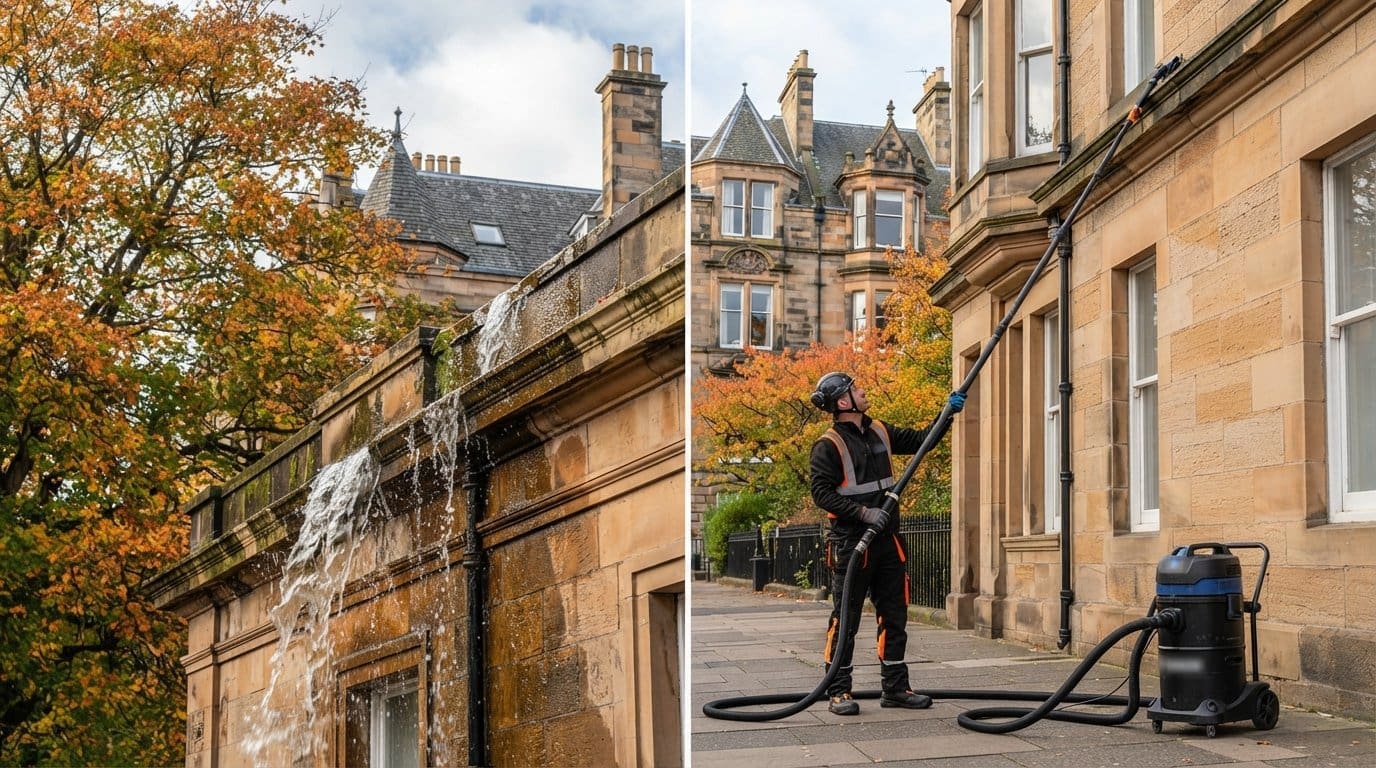



Pointing a high-pressure lance at your flat roof might seem like the quickest way to shift stubborn moss, but it’s often the fastest route to a structural disaster. You might be asking yourself, can you pressure wash a felt roof to restore that clean finish, yet the reality is that standard domestic jet washers can strip away up to 80% of the protective mineral granules in a single pass. These tiny stones are the primary defence against UV rays and weathering. Once they’re gone, the bitumen membrane is exposed, and your roof’s lifespan starts to plummet.
We understand the frustration of seeing thick green growth and unsightly lichen taking over your property, especially when DIY forums offer such conflicting advice. It’s only natural to want a moss-free roof without the looming fear of causing an expensive leak. This guide explains why high-pressure methods are a costly mistake for felt and introduces the professional, damage-free alternatives used in 2026. You’ll discover how to extend the life of your bitumen membrane while adhering to the latest BS 6229:2025 standards, ensuring your home remains protected against the damp British climate.
Key Takeaways
- Understand why the answer to ‘can you pressure wash a felt roof’ is a firm no, as high-pressure water strips the mineral defence layer and forces its way under seams.
- Discover how aggressive cleaning methods cause immediate delamination and significantly reduce the typical lifespan of your bitumen membrane.
- Explore safe, professional alternatives like softwashing and low-pressure steam cleaning that kill moss at the root without risking structural leaks.
- Gain a practical checklist for assessing your roof’s condition safely to determine if it’s ready for a clean or needs professional repair.
- Learn how Edinburgh’s coastal dampness accelerates organic growth and why preventative care is cheaper than emergency winter replacements.
Can You Pressure Wash a Felt Roof? The Short Answer
Can you pressure wash a felt roof? The short answer is a definitive no when using standard high-pressure equipment. Whilst asking can you pressure wash a felt roof is the first thought for many property owners facing thick moss growth, the mechanical force often does more harm than good. Standard domestic jet washers operate at pressures between 1,500 and 3,000 PSI; a velocity that acts as a mechanical assault on bitumen membranes. The only rare exceptions occur when using specialised variable-pressure equipment set to a “softwash” flow, which is technically not pressure washing in the traditional sense.
There is a fundamental difference between simply cleaning a roof and restoring it. Cleaning removes the visible debris, while restoration treats the biological root system to ensure long-term protection. Instead of abrasive force, professionals utilise specialised steam and softwash systems that we will explore later in this guide. These methods preserve the structural integrity of the roof whilst achieving a far superior finish.
Why the Question Arises: The Moss Problem
In the UK, and particularly across the East of Scotland, the maritime climate encourages rapid moss colonisation. Edinburgh’s persistent dampness and coastal haar create a perfect breeding ground for organic growth on flat surfaces. Homeowners naturally reach for a pressure washer because moss acts like a sponge, holding moisture against the roof surface and increasing the risk of internal damp. There is also a significant motivation for kerb appeal; a clean, dark roof looks far better than one covered in patchy green growth. However, aesthetic gains shouldn’t come at the cost of a waterproof seal.
The Fragile Nature of Bitumen Felt
Bitumen felt is a composite material sensitive to high-velocity water. Traditional bituminous waterproofing membranes rely on a delicate balance of oils and mineral additives to remain flexible. A standard felt roof consists of three primary layers:
- The Base: Usually a polyester or glass fibre mat that provides tensile strength.
- The Bitumen: The waterproofing agent that saturates the base.
- The Mineral Granules: The sacrificial top layer that shields the bitumen from UV degradation and weathering.
The mineral surface is your roof’s first line of defence. When high-pressure water hits these granules, it dislodges them instantly, leaving the bitumen exposed to the sun’s rays. Once the bitumen dries out and becomes brittle, cracks and leaks are inevitable. If you spot sagging or persistent damp, you may require gutter repair or a professional survey before proceeding with any cleaning programme.
The Hidden Dangers of High Pressure on Bitumen Felt
While the visual results of a jet wash might seem impressive initially, the structural consequences are often devastating. If you are still wondering can you pressure wash a felt roof without causing damage, it is helpful to look at the physics of high-velocity water. A standard pressure washer doesn’t just clean; it acts as a mechanical abrasive that can strip years of life from your roofing material in minutes. The force required to shift deep-rooted moss is almost always enough to compromise the waterproof integrity of the bitumen itself.
Granule Loss and UV Degradation
The small mineral stones embedded in the surface of your felt aren’t just for decoration. These granules are the only barrier protecting the underlying bitumen from the sun’s ultraviolet rays. Many homeowners ask can you pressure wash a felt roof to remove lichen, but they rarely account for the “sandblasting” effect on the protective layer. High-pressure water violently dislodges these stones, leaving the bitumen exposed. Without this shield, the bitumen quickly dries out, loses its flexibility, and begins to crack. This aligns with official Asphalt Roofing Manufacturers Association guidance, which warns that aggressive cleaning methods can lead to accelerated aging and premature roof failure.
Punctures and Seam Failures
Standard residential felt is often only 4mm thick. A high-pressure stream held too close or for too long can easily pierce this membrane, creating invisible punctures that allow water to seep into the underlying timber deck. Joints and laps are particularly vulnerable; the force of the water creates hydrostatic pressure that can lift bonded seams. Once a seam is compromised, moisture gets trapped between layers, leading to rot and insulation failure that you might not notice until the ceiling inside your home begins to sag.
Using high pressure introduces several critical failure points:
- Hydrostatic Pressure: Water is forced through existing hairline cracks or imperfections that were previously watertight.
- Seam Uplift: The jet can catch the edge of a bonded lap, prying it open and breaking the thermal seal.
- Insulation Saturation: Moisture trapped under the felt ruins the thermal properties of your insulation and encourages internal mould.
The aesthetic damage is also a significant concern. High-pressure lances often leave permanent “wand-marks” or stripes across the roof where the granules have been unevenly stripped. These scars cannot be washed away and usually require a full replacement or a costly coating to rectify. If you want to avoid these risks, choosing a professional roof cleaning service that uses low-pressure techniques is a far safer investment for your property’s longevity.
Beyond the surface, the danger of water ingress into the roof deck and insulation cannot be overstated. Trapped moisture in a flat roof system is notoriously difficult to dry out, often leading to structural decay amongst the roof joists. Protecting the integrity of the building envelope is much more important than a quick DIY fix that could lead to a four-figure repair bill.
Safer Alternatives: Softwashing and Steam Cleaning
Since we’ve established that the answer to can you pressure wash a felt roof is a firm no when using high-pressure systems, you might wonder how to effectively remove moss. The professional solution involves shifting from mechanical force to biological and thermal action. Professional softwashing and steam cleaning provide a deep, restorative finish without the risk of seam failure or granule loss. These methods are designed to protect the building envelope whilst delivering a result that lasts significantly longer than a standard jet wash.
How Softwashing Protects Your Roof
Softwashing is a low-pressure application that uses specialised, biodegradable roof cleaning solutions to treat organic growth. Unlike a traditional jet wash, the pressure used in this process is no higher than that of a standard garden hose. This eliminates the risk of forcing water under the felt laps or stripping the mineral surface. The process follows a methodical three-stage approach. First, we apply the cleaning solution across the entire surface. Then, we allow it to dwell, letting the solution penetrate the moss, lichen, and algae to kill the root systems and spores. Finally, we provide a gentle rinse once the biological bond has been broken.
The primary benefit of this biological action is longevity. Because softwashing kills the spores rather than just blasting away the visible growth, your roof stays cleaner for much longer. It treats the cause of the problem, not just the symptoms, ensuring the bitumen remains protected and intact. The solutions we use are compliant with the GB Biocidal Products Regulation, often utilising active substances like Didecyldimethylammonium chloride to ensure a thorough sanitisation that prevents rapid regrowth.
The Role of Professional Steam Cleaning
For roofs with particularly heavy moss cushions or stubborn biofilms, professional steam cleaning is often the most effective route. This method uses superheated water, often reaching temperatures of up to 150°C, delivered at very low pressure. The high temperature acts as the cleaning agent, melting away the grip of organic matter without the need for abrasive force. This is a critical part of specialised building envelope cleaning, as it sanitises the surface without stressing the delicate bitumen layers. High temperatures are particularly effective at killing stubborn lichen that has rooted into the mineral cap sheet.
Adhering to official UK safety standards for roof work ensures that every project begins with a thorough assessment of the roof’s structural integrity. Technicians use professional access equipment to avoid walking directly on fragile felt surfaces whenever possible. This approach respects the Work at Height Regulations 2005, ensuring both the operator and your property are protected. By choosing these gentle, temperature-based alternatives, you avoid the permanent scarring and punctures associated with DIY attempts, keeping your property secure and your roof’s lifespan extended.

Assessing Your Felt Roof Before You Clean
Before you decide on a cleaning method, you must evaluate the current health of your bitumen membrane. If you’re still asking can you pressure wash a felt roof, the physical state of the material often provides the answer. A roof that is already showing signs of age or structural fatigue will not survive the mechanical stress of a jet wash. It’s essential to conduct a safe inspection first to ensure your maintenance efforts don’t turn into a costly repair project.
Signs of Felt Degradation
Homeowners should look for specific red flags during a visual check from a safe vantage point, such as an upstairs window or a secured ladder. One of the most common signs is “alligatoring”, where the surface develops a pattern of cracks resembling reptile skin. This indicates that the bitumen has lost its essential oils and is becoming brittle. You should also look for areas of pooling water, known as ponding. According to the latest BS 6229:2025 standards, water that remains on a flat roof for more than 48 hours is a primary cause of accelerated degradation. Finally, check your gutters for a build-up of loose mineral granules. If you see a heavy accumulation of these small stones, your roof is already shedding its protective layer and is too fragile for aggressive cleaning.
DIY vs Professional Inspection
Walking on a flat roof is inherently dangerous. Felt can become incredibly slippery when wet or covered in biofilm, and older timber decks may be fragile or rot-damaged beneath the surface. A professional survey for roof cleaning Edinburgh properties involves a much deeper analysis than a simple visual check. We look for lifting seams, failing flashings around chimneys, and signs of internal moisture ingress that might be hidden under moss cushions.
It’s also vital to consider your drainage. A clean roof is useless if the water has nowhere to go. We always recommend clearing your gutters whilst cleaning the roof to prevent blockages that lead to standing water. If our inspection reveals that the felt has already been breached or the drainage is failing, you may require professional gutter repair or a specialist patch before any cleaning can safely begin.
Attempting a DIY clean on a compromised roof is a false economy. What starts as a way to save money often leads to a full roof replacement costing thousands of pounds. Using a fully insured professional ensures that the work is carried out safely and that any underlying issues are identified before they become emergencies. If you want to protect your home’s value and structural integrity, book a professional roof assessment today to ensure your property remains leak-free.
Professional Roof Care in the Edinburgh Climate
Living in the capital means dealing with a unique set of environmental challenges that directly impact the lifespan of your property. Edinburgh averages over 120 rainy days per year, with annual precipitation reaching up to 800mm. This persistent dampness, combined with the coastal haar from the Firth of Forth, creates a perfect microclimate for moss and lichen. Whilst the temptation to ask can you pressure wash a felt roof is high when you see thick growth after a wet Lothian winter, the local climate actually makes this method even riskier. Trapped moisture from an aggressive jet wash can undergo freeze-thaw expansion during our sub-zero snaps, prying open seams that were previously watertight.
We take a “no-nonsense” approach to property maintenance that Edinburgh landlords and homeowners value. Our focus is on long-term preservation rather than quick, abrasive fixes. By choosing professional roof cleaning in Edinburgh, you’re investing in a methodology that respects the structural integrity of your building envelope. Regular maintenance is always cheaper than an emergency call-out when a neglected flat roof fails in the middle of a Scottish winter storm.
Why Edinburgh Homes Need Specialist Care
Edinburgh’s architecture presents a diverse range of challenges, from historic Victorian tenements with parapet gutters to modern flat-roof extensions. The “sea fret” or salt-laden mist common in the East of Scotland can accelerate the degradation of bitumen if organic biofilms are left to take hold. These biofilms trap salt and moisture against the mineral cap sheet, leading to premature brittleness. We prioritise the use of eco-friendly, biodegradable products that are safe for use near delicate Edinburgh gardens and won’t harm the local ecosystem. This ensures your property is cleaned thoroughly without compromising the environment or the safety of your family and pets.
Booking Your Roof and Gutter Service
To provide the most comprehensive protection for your home, we often recommend a combined service that addresses both your roof and drainage. A moss-free roof is only effective if the drainage system can handle the runoff. Our team uses specialised steam and softwash equipment to sanitise your roof surfaces, followed by thorough gutter unblocking to ensure your property is winter-ready. We understand that property owners are busy; therefore, we offer a transparent, fixed-pricing model and aim to provide free same-day quotes wherever possible.
Don’t risk the integrity of your home with uncertified, high-pressure methods. If you’re still wondering can you pressure wash a felt roof, let our experts show you a safer, more effective way to restore your property’s appearance and protection. Contact Ultimate Clean Solutions for a safe roof clean today and join hundreds of Edinburgh residents who trust us with their property maintenance.
Protect Your Property with Safe Roof Maintenance
Choosing the right care for your home is essential for long-term structural health. We’ve established why the answer to can you pressure wash a felt roof is a clear no for anyone hoping to avoid costly leaks and granule displacement. Instead of abrasive force, professional softwashing and steam cleaning offer a restorative solution that preserves your bitumen membrane whilst effectively eliminating moss and lichen. This proactive approach ensures your roof remains a reliable barrier against the unpredictable Edinburgh weather.
Ultimate Clean Solutions provides expert moss removal using safe softwash techniques, and our team is fully insured for both residential and commercial work. We are proud to serve the local community with fixed pricing transparency and a commitment to quality that property owners can depend on. Taking the time to assess and treat your roof correctly today prevents the stress of emergency repairs during a damp Scottish winter.
Don’t leave your home’s protection to chance. Get a Free Same-Day Quote for Professional Roof Cleaning and ensure your roof stays in peak condition for years to come.
Frequently Asked Questions
Is it ever safe to pressure wash a flat roof?
It is generally considered unsafe to use high-pressure equipment on any flat bitumen surface. High-velocity water dislodges the mineral granules that protect the felt from UV damage and can easily rupture bonded seams. While some modern membranes are more robust, the risk of causing a leak is far too high for a DIY attempt. Professionals instead use specialised low-pressure systems that sanitise the surface without the mechanical stress associated with jet washing.
How much does professional softwashing cost compared to a new roof?
Professional cleaning is a preventative investment that costs a small fraction of a full roof replacement. A typical garage or extension felt roof replacement in the UK can cost between £1,200 and £2,400 depending on the materials used. By maintaining the existing membrane with gentle cleaning, you extend its lifespan by several years. This avoids the disruptive and expensive process of stripping back to the timber joists and installing new bitumen layers.
What happens if I ignore the moss on my felt roof?
Ignoring moss growth leads to accelerated structural decay. Moss acts like a sponge, holding moisture against the bitumen membrane for prolonged periods. In Edinburgh’s damp climate, this moisture never fully evaporates, encouraging the roots to pry into the felt laps. Over time, this constant dampness rots the underlying timber deck and saturates your insulation, eventually causing the ceiling inside your property to sag or develop mould patches.
Can moss growth cause my felt roof to leak?
Yes, moss is a primary cause of leaks on flat roofs. Property owners often ask can you pressure wash a felt roof when they spot green growth, but the moss itself is the immediate threat. Its root systems can penetrate hairline cracks, and during the winter, trapped water expands as it freezes. This expansion forces seams apart and widens existing gaps, allowing water to bypass the waterproofing and enter your home’s structure.
How long does a professional roof clean take to complete?
The duration of a professional clean varies based on the size of the roof and the extent of the moss coverage. Most residential projects in Edinburgh take between one and two days to complete thoroughly. This includes the initial safety assessment, debris removal, and the application of biodegradable cleaning agents. We work methodically to ensure the building envelope is protected throughout, and we always include a final rinse to clear the gutters of any dislodged matter.
Will the chemicals used in softwashing damage my garden plants?
Professional softwashing uses eco-friendly, biodegradable cleaning agents that are safe for your garden when applied correctly. Our team follows a strict safety protocol, which includes pre-wetting any surrounding foliage and rinsing the area thoroughly after the treatment. By controlling the runoff and using specialised equipment, we ensure that your plants, pets, and local environment remain protected whilst we restore the appearance and integrity of your felt roof.
How often should I have my felt roof professionally cleaned in Edinburgh?
We recommend a professional assessment and clean every two to three years for properties in Edinburgh. Our coastal dampness and frequent haar provide ideal conditions for biofilms to return. While you might wonder can you pressure wash a felt roof every year, a professional softwash treatment at these intervals is much safer. It prevents thick moss cushions from forming and allows us to catch minor issues like lifting seams before they become leaks.
Can I walk on my felt roof to clean it myself?
Walking on a felt roof is dangerous and highly discouraged for homeowners. Older timber decks can become fragile over time, and a layer of wet moss or algae is incredibly slippery. There is a significant risk of falling or accidentally puncturing the membrane with unsuitable footwear. Professionals use specialised access equipment and are fully insured to work at height, ensuring the job is done safely without putting you or your property at risk.