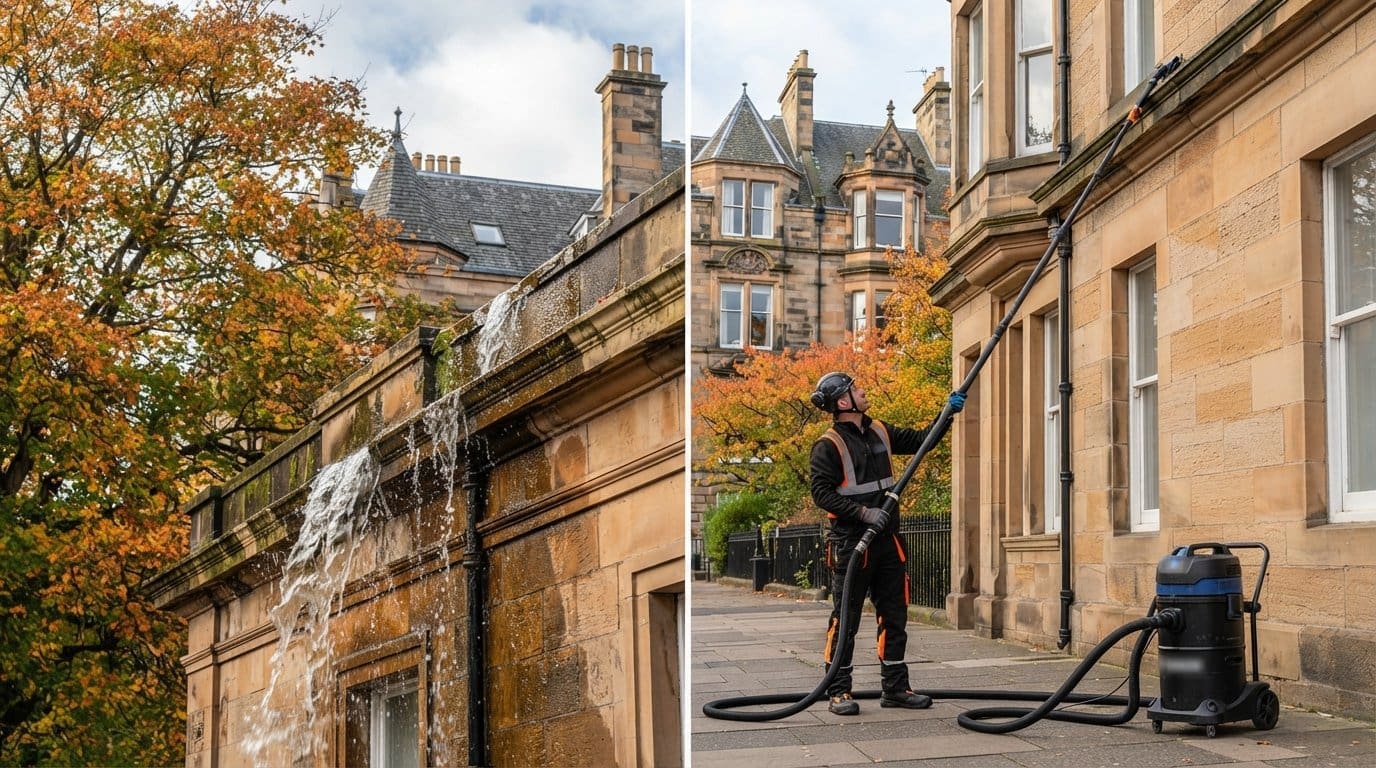



Can overflowing rainwater really cause severe, persistent damp inside your home? Discovering peeling wallpaper, musty odours, or unsightly tide marks on an upstairs ceiling is deeply frustrating, especially whilst worrying about hidden timber rot or extortionate repair bills. In reality, one of the most frequent causes of damp in house from gutters is simple exterior neglect rather than an incurable structural defect.
You don’t need to spend thousands on disruptive internal damp-proofing when the real culprit sits along your roofline. In this guide, you’ll discover how blocked and misaligned gutters saturate external brickwork, how to distinguish penetrating damp from routine condensation or rising damp, and the practical maintenance steps needed to resolve moisture ingress. We’ll examine the primary trouble spots to check around your rainwater system so you can dry out your walls safely and protect your property.
Key Takeaways
- Understand the primary causes of damp in house walls from gutters, including how decaying debris and failing joint seals force rainwater directly into your masonry.
- Discover the mechanism of penetrating damp and see how water migrates horizontally through solid brickwork and stone cavities via capillary action.
- Learn how to accurately diagnose your damp issue by comparing high-level rainwater ingress with condensation and ground-level rising damp.
- Recognise the hidden structural threats of unattended roofline leaks, from ruined ceiling laths to severe timber rot within roof spaces.
- Follow an actionable property maintenance plan featuring seasonal gutter clearance and targeted joint repairs to protect your home exterior.
What Is Gutter-Related Penetrating Damp and How Does It Occur?
Penetrating damp occurs when external moisture travels horizontally through a building’s fabric into living spaces. While many homeowners suspect cracked pointing or render breakdown, one of the most overlooked causes of damp in house from gutters is uncontrolled roof runoff. When eaves fail, unmanaged water cascades down exterior walls instead of discharging safely into gullies. This constant drenching creates severe structural dampness as porous masonry drinks in water via capillary action. Because rainwater collects at the roofline, isolated damp patches appearing near upper-floor ceilings almost universally point towards defective eaves or blocked gutter troughs.
The Mechanics of Rainwater Ingress Through External Walls
Solid masonry and cavity walls both suffer when subjected to continuous sheets of cascading water. Even sound exterior brickwork can absorb only a finite volume of water before full saturation occurs. Once masonry reaches maximum moisture capacity, hydrostatic pressure drives water deeper into the wall assembly. In cavity walls, this moisture routinely crosses the air cavity by bridging across wall ties coated in historic mortar droppings. Once water touches the interior skin, porous gypsum plaster acts like a sponge, drawing moisture directly out of the structural blockwork. This physical progression produces bubbling paint, unsightly tide marks, and deteriorating interior plasterboard.
Why Gutters Are Your Home’s First Line of Defence
A standard residential roofline handles thousands of litres of rainwater every year, relying on clean troughs and uninterrupted downpipes to protect external walls. Carefully calculated falls guide torrential downpours away from brickwork, eaves, and foundations. However, when decomposing leaves, moss, or failed seals obstruct that drainage path, a single storm can force hundreds of litres of runoff over fascia boards and down your external elevations.
Identifying and resolving the root causes of damp in house from gutters protects your property against expensive interior damage. Organising proactive maintenance and prompt gutter repair in Edinburgh ensures rainwater sheds cleanly away from stone and brickwork, keeping internal walls completely dry throughout the wettest seasons.
The Primary Causes of Damp in House Walls From Gutters
Rainwater systems fail for several distinct mechanical reasons, turning what should be a protective drainage network into a direct source of structural damp. When assessing the leading causes of damp in house from gutters, the issue rarely stems from sudden catastrophic failure. Instead, it usually develops through gradual debris build-up, shifting brackets, or degrading rubber seals that escape notice until internal wallpaper begins to lift.
Blockages From Debris, Silt, and Weed Accumulation
Fallen autumn leaves, roof moss, and windblown soil settle along gutter channels, combining into a dense, peat-like sludge. As this slurry thickens, weed seeds readily take root and establish root systems that act like physical dams. During prolonged Scottish downpours, these obstructions trigger a severe back-surge. Because the water cannot flow towards the downpipe drop, it rises over the back rim of the gutter trough, soaking the hidden timber eaves. For stubborn downpipe clogs that trap standing water across entire roof sections, scheduling specialised gutter unblocking clears the system before moisture tracks inward.
Cracked Downpipes, Loose Brackets, and Leaking Joints
Gutter channels expand and contract continuously through seasonal temperature swings. Over time, this natural thermal movement breaks down the watertight seals within union pieces and running outlets. When rubber gaskets perish, a steady stream of water escapes during every rainfall, dripping rhythmically onto the same patch of exterior brickwork. Additionally, physical damage creates focused points of failure that quickly overwhelm masonry:
- Freeze-thaw splits: Trapped standing water freezes during sub-zero cold snaps, fracturing brittle uPVC components or splitting historic cast iron downpipes from behind.
- Concealed pipe sprays: Rear-facing hairline cracks in vertical downpipes spray high-velocity jets of water directly into exterior mortar joints.
- Channel sagging: Loose, corroded, or missing fascia brackets allow horizontal gutter lengths to dip, creating stagnant pools that encourage joint separation.
Fascia Board Decay and Concealed Roofline Leaks
Constant spillover rapidly rots wooden fascia boards positioned directly behind gutter troughs. As timber softens and decays, it loses the structural strength needed to hold screw fixings, causing gutter runs to tilt inwards. Consequently, water flows straight into the soffit cavity, entering internal ceiling joists and wall plates without leaving immediate exterior clues. If you notice pooling water or suspect hidden leaks, booking a professional inspection and gutter repair in Edinburgh allows experienced technicians to realign brackets and replace failing seals before internal plasterwork suffers irreparable damage.
Diagnosing the Problem: Gutter Damp vs Rising Damp and Condensation
Correctly pinpointing internal moisture sources saves thousands of pounds in unnecessary remedial work. Property owners frequently mistake roofline ingress for internal condensation or rising damp, leading to misdirected repairs. The table below outlines how to differentiate the primary causes of damp in house from gutters from other domestic moisture issues.
| Damp Type | Typical Location | Visual Appearance | Odour and Behaviour |
|---|---|---|---|
| Gutter Penetrating Damp | Upper walls, ceilings, cornices, near downpipes | Isolated brown tide marks, bubbling paint, salt patches | Damp smell sharpens noticeably after rainfall; dries slowly between storms |
| Condensation | Cold external corners, window reveals, behind furniture | Widespread black stippled mould, surface water droplets | Stale air; worse during winter mornings with low heating or ventilation |
| Rising Damp | Ground floor only, terminating below 1 metre | Continuous horizontal tide mark, crumbling skirting boards | Persistent earthy smell; remains constant regardless of recent weather |
Internal Symptoms: What Your Walls and Ceilings Reveal
High-level wall staining immediately eliminates rising damp from your diagnosis, as capillary suction from ground soil cannot draw moisture above one metre. Look for distinct, yellowish-brown tide marks tracing downward from ceiling cornices or gathering around upstairs window lintels. Plaster in these areas feels cold and spongy to the touch. Crucially, pay attention to the timeline: if the damp patch darkens or the musty smell intensifies immediately after heavy rain, roofline runoff is penetrating your walls.
External Warning Signs Along the Eaves and Wallhead
Step outside during dry weather and inspect your upper elevations with binoculars. Overflowing gutters leave unmistakable external markers:
- Dark vertical water tracking or green algae staining beneath gutter unions
- White crystalline salt deposits (efflorescence) blooming across masonry faces
- Eroded lime pointing washed out by chronic rainwater splashing
- Visible tufts of grass or weeds sprouting from upper troughs
Why Misdiagnosing Gutter Damp Leads to Costly Errors
Remedial damp contractors often recommend invasive chemical injection courses, which can cost £1,000 to £3,000. However, these barriers treat only ground-level moisture; applying them to penetrating damp traps water within the masonry wall, accelerating structural decay. Traditional building guidance from Historic Environment Scotland confirms that keeping rainwater goods free-flowing remains the single most effective way to prevent stone and brick saturation. While running a dehumidifier extracts indoor humidity temporarily, it cannot halt active rainwater intrusion. Always fix the defective exterior drainage channel before investing in plaster replastering or decorative painting.

The Consequences of Ignoring Gutter Leaks Inside Your Home
Leaving roofline faults unaddressed turns a minor maintenance chore into a major structural hazard. When unmanaged rainwater continuously attacks exterior masonry, moisture migration triggers destructive fungal blooms, ruins thermal efficiency, and compromises indoor living spaces. Understanding these compounding risks highlights why overflowing channels rank among the most damaging causes of damp in house from gutters.
Structural Timber Damage: Wet Rot and Dry Rot Outbreaks
When damp penetrates roof cavities, structural timbers face immediate danger. Moisture content exceeding 20% awakens dormant fungal spores, leading to localised wet rot in roof rafters, ceiling laths, and bearing joists. If trapped moisture lingers in unventilated voids, devastating dry rot can follow. Dry rot mycelium rapidly travels through porous masonry to attack adjacent timbers, requiring disruptive structural replacements and extensive timber treatments to resolve.
Health Implications: Black Mould and Indoor Air Quality
Chronically damp interior surfaces create the ideal environment for toxic black mould (Stachybotrys chartarum), which feeds directly on damp plasterboard and cellulose wallpaper paste. Airborne mould spores degrade indoor air quality and trigger serious respiratory symptoms, skin reactions, and sinus issues. Health studies indicate that exposure to indoor damp and mould increases the risk of developing or worsening asthma by 30 to 50%. Simply washing walls with mould spray provides short-lived relief; colonies return swiftly until the exterior water leak stops.
Exterior Masonry Spalling and Thermal Loss
Water-logged building fabrics degrade external finishes just as quickly as internal decor. Trapped water inside saturated stone or brickwork expands during sub-zero winter temperatures, causing faces to crack and shear off through frost spalling. Leaking joints also wash away sandy mortar, leaving exterior joints hollow. Furthermore, saturated cavity insulation loses its thermal resistance, accelerating heat loss and causing household heating bills to surge.
Preventing these cascading structural issues starts with maintaining clean, functioning rainwater goods. If you notice signs of moisture tracking inside, contact Ultimate Clean Solutions to inspect, clear, and repair your drainage system before minor leaks cause lasting damage.
How to Stop and Prevent Gutter-Related Damp in Your Property
Eliminating rainwater ingress requires a methodical, step-by-step strategy. Simply repainting interior tide marks or wiping down mould treats the symptoms while leaving the structure vulnerable. To resolve the root causes of damp in house from gutters for good, property owners must systematically clear blockages, seal damaged components, and allow trapped moisture to evaporate fully.
Step 1: Conduct a Thorough Rainwater System Clearance
Begin by removing every trace of organic build-up from gutter troughs, running outlets, and downpipe swan-necks. Silt and decomposing moss accumulate heavily around downpipe openings, creating hidden dams. Working safely at height requires secure ladder stabilisers or specialised ground-based clearance equipment, making professional assistance the safest choice for multi-storey townhouses and Victorian tenements. Once technicians lift away all debris, a comprehensive water test confirms that runoff flows freely toward ground gullies without backing up behind the eaves.
Step 2: Carry Out Essential Gutter and Downpipe Repairs
Clean channels reveal underlying mechanical faults that need prompt attention. Gutter sections must maintain a continuous gravitational pitch toward downpipes; standing water indicates misaligned or strained brackets that require re-screwing. Leaking unions need disassembling, scraping clean of degraded mastic, and resealing with high-grade, flexible exterior sealant. If persistent sagging or cracked brackets continue to dump water against your brickwork, scheduling professional gutter repair in Edinburgh restores structural stability and stops ongoing wall soaking.
Step 3: Safely Dry Out Masonry and Restore Living Spaces
Once the exterior rainwater system functions correctly, the internal drying process begins. Thoroughly saturated solid stone or brick masonry can take several months to dry completely. Protect this recovery phase using the following measures:
- Gentle indoor ventilation: Maintain steady background heating and consistent airflow rather than blasting walls with extreme direct heat, which can crack historic plaster.
- Salt management: Brush away harmless white efflorescence salts dry from plaster surfaces as moisture migrates outward; avoid washing them with water.
- Moisture testing: Test wall dampness with an electronic protimeter to ensure deep substrates have reached safe moisture levels before applying fresh plaster or breathable emulsion.
Establishing an annual maintenance routine prevents expensive structural damage from returning. Booking proactive seasonal maintenance through Ultimate Clean Solutions keeps your property exterior protected, ensuring that heavy rainfall drains away smoothly year after year.
Take Decisive Action to Protect Your Property from Roofline Damp
Addressing rainwater ingress early prevents extensive plaster damage, structural timber decay, and toxic black mould. Uncovering the root causes of damp in house from gutters demonstrates that most internal moisture issues require exterior solutions rather than disruptive chemical treatments. Once you remove stubborn blockages and realign leaking channels, your external masonry can finally dry out safely and naturally.
Safeguarding your home requires reliable maintenance and the right practical expertise. As an established Edinburgh team of fully insured exterior property maintenance technicians, we utilise specialised clearing equipment and safe ladder access for thorough diagnostics across residential and commercial properties. Instead of waiting for heavy rainfall to breach your walls, book your professional gutter clearance and inspection with Ultimate Clean Solutions today to keep your living spaces completely dry.
Frequently Asked Questions
Can a blocked gutter really cause penetrating damp inside my house?
Yes, blocked gutters represent one of the most common causes of damp in house from gutters across the UK. When organic matter stops water draining, rainfall spills over the sides and saturates external brickwork or stone. Sustained soaking overcomes masonry weather resistance, allowing moisture to travel horizontally through wall ties and plaster into your living areas.
How long does it take for a wall to dry out after fixing a gutter leak?
A saturated solid masonry wall typically takes several months to dry completely once the roofline defect is resolved. A general rule of thumb in property maintenance is one month of drying time per inch of masonry thickness. Maintaining gentle background heating and adequate room ventilation speeds up evaporation without cracking the historic plasterwork.
Does building insurance cover interior damp damage caused by blocked gutters?
Most standard UK home insurance policies reject claims for water damage stemming from blocked or neglected gutters. Insurers classify organic blockages, loose unions, and degraded brackets as preventable maintenance failures rather than sudden, accidental events. Keeping regular service records from professional exterior maintenance helps prove you have fulfilled your policy obligations regarding routine property upkeep.
Where do you typically see internal damp when gutters are overflowing?
Gutter-induced penetrating damp typically appears along top-floor ceilings, high up on exterior-facing walls, or around upper window reveals. You will usually observe discoloured brown tide marks, bubbling paint, or peeling wallpaper directly beneath the roofline. If damp clusters around downpipe brackets on external corners, water is likely tracking down from an obstructed eaves gutter above.
How do I know if damp is caused by gutters or by condensation?
Condensation appears as widespread, stippled black mould across cold external corners and window frames, accompanied by steamy window glass. Penetrating damp from guttering forms isolated, distinct brown water stains that turn darker and feel colder following heavy rainstorms. Condensation also remains linked to poor airflow, whereas gutter damp directly tracks Scottish weather cycles.
Can damp from gutters spread to neighbouring walls in terraced houses or tenements?
Yes, shared rainwater troughs on Edinburgh tenements and terraced properties can easily cause damp issues that cross boundary lines. When a blocked downpipe or joint failure saturates common wallheads, moisture migrates across mutual stone party walls. This capillary movement quickly produces internal plaster staining and hidden timber rot inside adjacent properties sharing the same roofline drainage.
How often should gutters be cleaned to prevent penetrating damp?
Clearing your gutter network at least once a year, preferably in late autumn after leaf fall, reliably prevents the primary causes of damp in house from gutters. Homes situated near overhanging trees or exposed to high coastal winds across Edinburgh often require bi-annual maintenance. Routine clearances ensure that troughs, outlets, and downpipe swan-necks remain free of silt and moss before winter freezes take hold.