


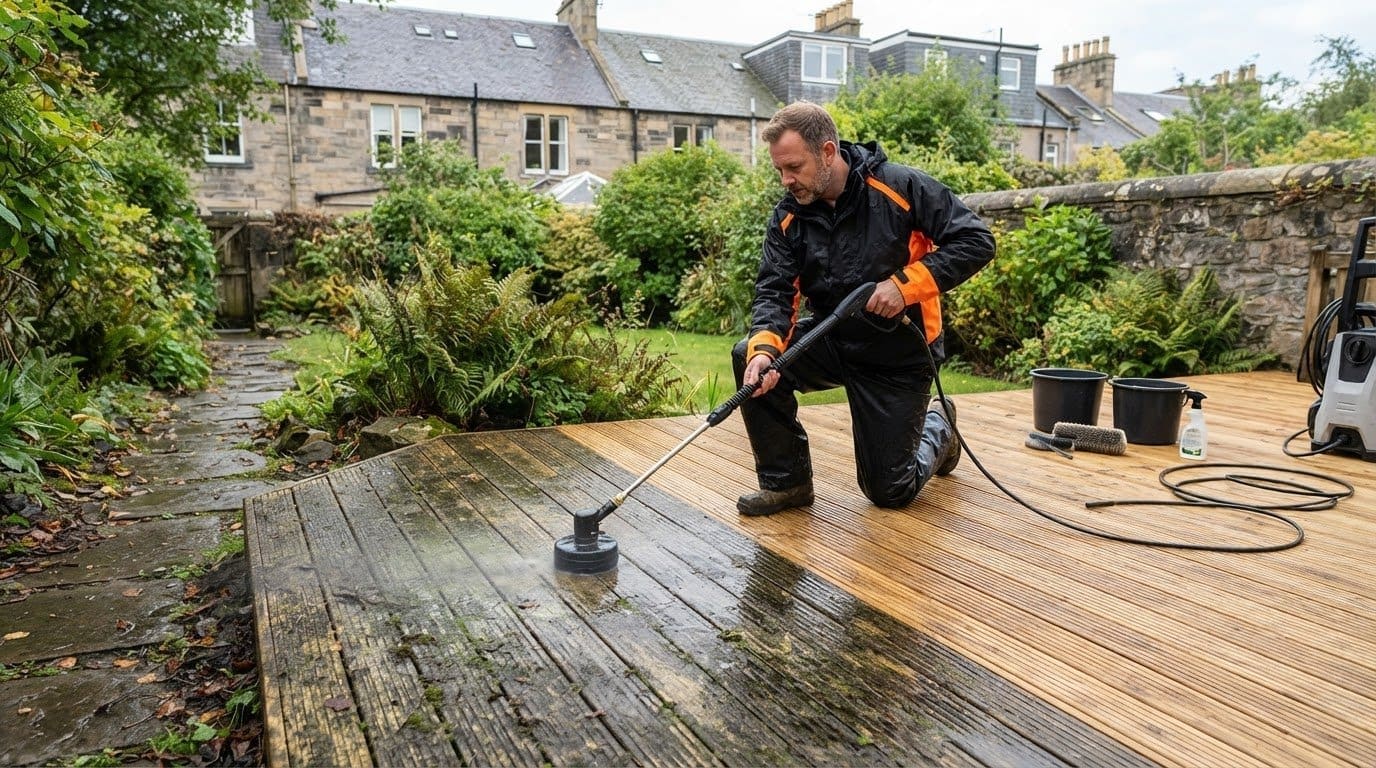
The quickest way to clean a deck can also be the easiest way to damage it. If algae and grime have left your decking looking neglected or feeling slippery, pressure washing might seem like the obvious fix. However, the right approach for timber may not suit composite boards, and Edinburgh’s damp conditions can encourage stubborn organic growth.
It’s sensible to want a cleaner, safer-looking deck without risking splintered timber or marked composite. This guide to decking cleaning Edinburgh explains how to remove algae and grime while matching the method to your decking material and its condition. You’ll learn what you can tackle yourself, when professional cleaning may be a better option, and what to ask before requesting a quote.
We’ll also explain why pressure washing needs care and how a professional service can assess the surface before choosing between pressure washing and cleaning solutions. Ultimate Clean Solutions provides decking cleaning in Edinburgh, with the method selected according to the job. By the end, you’ll have practical steps for making a confident choice and keeping your deck in good condition.
Key Takeaways
- Learn how moisture, shade and organic debris can contribute to algae and grime on outdoor decking.
- Assess the material, finish, age and condition of your boards before choosing a cleaning method.
- See why pressure washing needs careful consideration, and how gentler cleaning may be worth discussing for your deck.
- Follow a simple preparation sequence, including clearing furniture and checking access before cleaning begins.
- Use these questions when comparing decking cleaning Edinburgh options, so you can understand the proposed method and what a project quote covers.
Why does decking in Edinburgh develop algae and grime?
Outdoor decking is exposed to the elements, so algae, dirt and organic debris can gradually collect on its surface. In Edinburgh, damp conditions and limited sunlight in shaded areas can leave boards slow to dry, creating conditions where surface growth may become more noticeable. Leaves, pollen and other everyday debris can also settle between boards or in textured surfaces.
Decking cleaning means removing surface contamination with a method suited to the deck’s material and condition. That distinction matters: washing may remove grime, but it won’t necessarily reverse fading, a deep stain or damage to the boards. Before deciding what to do, look at the deck’s appearance, how the surface feels and whether the material seems sound. Ultimate Clean Solutions provides decking cleaning in Edinburgh, with the approach chosen for the specific job.
What causes algae and discolouration on decking?
Moisture and shade can encourage surface growth, while dirt and organic debris add to the build-up. However, green or dark marks don’t always have the same cause. Some may be algae or grime; others may be staining, weathering or a change in the timber’s colour. Cleaning can address surface deposits, but it may not restore faded boards or resolve damage.
Timber treatments can help protect wood from decay and biological degradation, although they don’t make a deck immune to surface deposits. For background on the subject, see wood preservation treatments. Check what you can see across the boards, including shaded sections and areas where debris tends to gather, before choosing a cleaning method.
How can you tell when decking needs attention?
Visible build-up, persistent discolouration or a slippery feel are reasons to inspect the decking more closely. Take care as you check the surface, particularly if it feels slick underfoot. Also look for changes in colour or condition that may not be removable with cleaning. A mark that remains after loose dirt is cleared may need a different response from ordinary surface grime.
A closer decking assessment makes sense when build-up persists, the surface feels slippery or the boards show signs of discolouration or damage.
Look across the whole deck rather than judging it by one patch. Note whether deposits appear concentrated in shaded or damp areas, and check whether the boards look worn or damaged. This gives you a clearer starting point for deciding whether DIY cleaning is appropriate or whether to ask about decking cleaning Edinburgh for your particular surface.
How should decking cleaning methods match timber or composite surfaces?
Timber and composite decking can both collect surface grime, but they don’t necessarily respond to the same cleaning method. Before cleaning, consider the material, its finish, age and current condition. A sound, relatively new surface may tolerate an approach that would be unsuitable for weathered boards, worn coatings or a deck with existing damage. For safe decking cleaning Edinburgh, assess the actual surface rather than relying on a one-method-fits-all rule.
Timber and composite decking: a practical comparison
Use this as a starting point, not a guarantee of suitability. The right choice depends on the individual deck and, for composite products, the manufacturer’s care guidance.
| Decking type | What to check | Cleaning approach |
|---|---|---|
| Timber | Wear, loose coatings, existing damage and the condition of the finish | Case-dependent. Check a small, inconspicuous area before cleaning the wider surface. |
| Composite | Product care guidance, surface texture, marks and signs of wear | Case-dependent. Confirm the product’s recommendations before choosing pressure or cleaning products. |
What should you consider before cleaning timber decking?
First, distinguish removable dirt from worn timber, loose coatings or other damage. Cleaning may lift surface deposits, but it won’t repair a damaged board or necessarily restore its previous colour. If you’re cleaning the deck yourself, test the proposed method on a small, hidden area and check the result before proceeding. Avoid applying pressure or products without guidance suited to the surface.
Does composite decking need a different cleaning approach?
Composite products can vary, so check the manufacturer’s care instructions rather than assuming advice for one deck applies to another. Look closely at the surface before selecting pressure or a cleaning product; an unsuitable choice could affect its finish. Deck material and condition should guide method choice.
Pressure washing isn’t automatically suitable for every timber or composite deck. Excessive pressure may mark or damage a surface, while an unsuitable product may affect its finish. The Timber Decking and Cladding Association offers information relevant to timber decking, which can help inform your assessment.
If you’d rather have the surface assessed before work begins, you can review the decking cleaning service. Ultimate Clean Solutions uses pressure washing or cleaning solutions as appropriate to the job; ask which materials and methods are suitable for your particular deck.
Pressure washing or gentler cleaning: which suits your decking?
Pressure washing can remove surface deposits, but it isn’t automatically the safest or most suitable option for every deck. The choice depends on the decking material, its finish and condition, as well as the type of build-up. A gentler approach may be preferable where the surface is worn or vulnerable. Compare the methods as a starting point, then assess the deck itself before deciding.
| Consideration | Pressure washing | Gentler cleaning |
|---|---|---|
| Control | Water pressure, distance and technique affect how the surface is cleaned. | Cleaning solutions or less forceful methods may allow a more cautious approach. |
| Surface assessment | Check the material, finish and existing wear before use. | Check that the method and any cleaning product suit the decking. |
| Limitations | Excessive pressure or poor technique may mark or damage boards. | A gentler method may not remove every deposit, and products still need to be suitable and used as directed. |
When might pressure washing be appropriate?
Pressure washing is one available method, but suitability depends on the deck and an on-site assessment. The operator’s technique and the distance from the boards can affect the result, so pressure alone doesn’t determine whether cleaning is safe. Before work begins, ask how the provider will assess and protect the surface, and what they’ll do if they find worn areas or existing damage.
When should you choose a gentler cleaning method?
A more cautious method may be worth considering for aged, worn or coated decking, or wherever the surface appears vulnerable. Any cleaning agent should be suitable for that material and used as directed. Even products described as eco-friendly or biodegradable aren’t automatically harmless in every situation, so ask what’s proposed and how it will be applied.
For decking cleaning Edinburgh, a method should follow the assessment, not the other way round. Ultimate Clean Solutions uses pressure washing or cleaning solutions as appropriate to the job, rather than treating one approach as right for every deck. If you’d like to understand the wider approach, see the details of its pressure washing services in Edinburgh, then ask which method may suit your decking.

How can you prepare for decking cleaning and avoid common mistakes?
A little preparation helps you clean more methodically and spot issues before water or cleaning products reach the boards. Whether you’re doing the work yourself or arranging professional decking cleaning in Edinburgh, use this checklist to get the area ready and share relevant details with the cleaner.
What should you do before cleaning a deck?
- Clear the surface. Move furniture, planters and other loose items where practical. Identify delicate nearby items that may need to be moved or protected.
- Check access. Make sure the route to the decking is clear, and consider whether gates, steps or narrow paths could affect access to the work area.
- Inspect the boards. Look for loose boards, existing damage, worn coatings or patches that may need extra care. Make a note of anything you’re unsure about.
- Plan for water and debris. Consider where rinse water will run and where loosened leaves or dirt can be collected, so they don’t create an obstruction or spread across the area.
- Check the cleaning guidance. Read the decking or product manufacturer’s care instructions before choosing a method or cleaning agent.
For a professional visit, tell the provider what you know about the decking material, its condition and any areas of concern. Clear access and a useful description of the surface can help the team assess the job before selecting a cleaning approach.
Which decking-cleaning mistakes should you avoid?
More pressure or a larger amount of cleaning product doesn’t automatically mean a better result. Either could affect the finish if it doesn’t suit the surface. Don’t combine cleaning products, and follow the product instructions rather than improvising or applying an untested method across the whole deck. If you’re unsure, test only as directed by the relevant care guidance, or pause and ask for advice.
Stop if the surface appears to be damaged or changes unexpectedly during cleaning. Likewise, don’t proceed if you can’t identify the decking material or its finish with confidence. A cautious pause is preferable to continuing with a method that may not suit the boards.
If you’d rather have the surface assessed and cleaned as part of a specific project, you can request a decking cleaning quote from Ultimate Clean Solutions. Share what you’ve noticed and ask what the proposed work includes before arranging the service.
Choosing a decking cleaning service in Edinburgh: what to ask
A clear quote should explain how the provider will assess your deck and define the work. Before arranging decking cleaning Edinburgh, ask these questions so you can understand the proposed approach and compare quotes on a like-for-like basis.
What should you ask before accepting a decking-cleaning quote?
- How will you identify the decking material and assess its condition? Share what you know about the boards, finish, age and any damage.
- Which cleaning approach do you propose, and why? Ask whether the job may involve pressure washing or cleaning solutions, and how the method relates to your deck.
- Will you use cleaning agents? If so, ask what will be used and how it will be applied.
- What does the quote include? Clarify which areas and tasks are covered, and whether any additional work is excluded.
A project quote should reflect the property and the decking work required. Make sure the provider has enough information about the deck’s size, access and condition to explain the scope. Ask for clarification if any part of the proposed work is unclear.
What should you expect from a professional decking clean?
Expect the provider to discuss the surface and its condition before selecting a method. They should explain the proposed work clearly, without promising that cleaning will remove staining, fading or existing damage. Ultimate Clean Solutions offers decking cleaning in Edinburgh and project-based quotes. You can review the Edinburgh decking cleaning service for further details.
If you’d prefer not to clean the deck yourself, request a decking cleaning quote for your property. Share details about the surface and the work you have in mind to help clarify what the project involves.
Choose a safer way to refresh your decking
A clean deck starts with the right method for its material and condition. Timber and composite boards can respond differently, so don’t assume pressure washing or a cleaning product will suit every surface. Check for wear or damage first, and follow the relevant care guidance before cleaning.
Algae, grime and slippery patches can signal that your decking needs attention, but cleaning may not remove fading, deep staining or damage. Clear furniture and loose items before work begins, then ask a provider how they’ll assess the deck, which method they propose and what the project quote includes.
For decking cleaning Edinburgh, Ultimate Clean Solutions includes decking cleaning in its exterior cleaning services and offers project-based quotes. The team chooses between pressure washing and cleaning solutions according to the job, rather than treating one method as right for every deck.
If you’d rather leave the work to a professional, request a quote for decking cleaning in Edinburgh for your property. With a clear assessment and scope, you can take the next step with confidence and look forward to a cleaner outdoor space.
Frequently Asked Questions
Can pressure washing damage decking?
Yes, pressure washing can damage decking if the method doesn’t suit the material or condition. Excessive pressure or unsuitable technique may mark the surface, particularly if boards are worn or have a vulnerable finish. Before cleaning, check the decking and ask how the pressure, distance and approach will be controlled. If you’re unsure about the surface, pause and seek advice rather than testing a forceful method across the whole deck.
How do you clean algae off decking safely?
Start by identifying the decking material and checking its care guidance. Remove loose debris, then choose a cleaning method and any cleaning product that’s suitable for that surface, following the instructions carefully. Don’t mix products or assume every green mark is algae. Test cautiously where guidance allows, and stop if the boards appear damaged or change unexpectedly. For decking cleaning Edinburgh, a surface assessment can help determine a suitable approach.
How often should decking be cleaned in Edinburgh?
As a general guide, a thorough clean once or twice a year may be enough for many decks. However, decking in a damp, shaded spot can develop surface growth more quickly, so inspect it regularly and clean when build-up or a slippery feel appears. Some guidance suggests checking shaded or damp decks every few months. Base the timing on the actual surface and condition, rather than following a fixed schedule alone.
Can you use a pressure washer on composite decking?
Sometimes, but don’t assume a pressure washer is suitable for every composite deck. Composite products vary, and excessive pressure or an unsuitable technique can mark the surface. Check the manufacturer’s care instructions first, then assess the deck’s condition and test only as directed. If you’re uncertain, ask a cleaning provider to explain the proposed method and how it suits your particular decking before work begins.
How much does decking cleaning cost in Edinburgh?
The cost depends on the property and the decking work required, so request a project-specific quote rather than relying on a general figure. The deck’s size, condition, access and the proposed cleaning approach may all affect the scope. Ask what areas and tasks the quote includes, which method is planned and whether any extra work is excluded. Ultimate Clean Solutions offers project-based quotes for exterior cleaning, including decking cleaning.
Are biodegradable decking cleaners safe for plants and pets?
Not automatically. “Biodegradable” describes a product characteristic, but it doesn’t mean the cleaner is harmless to plants, pets or every nearby surface. Check the product instructions and ask the provider what will be used and how it will be applied. Keep people and animals away as directed, and take care around planting and drainage. If you have a specific concern, raise it before cleaning starts.