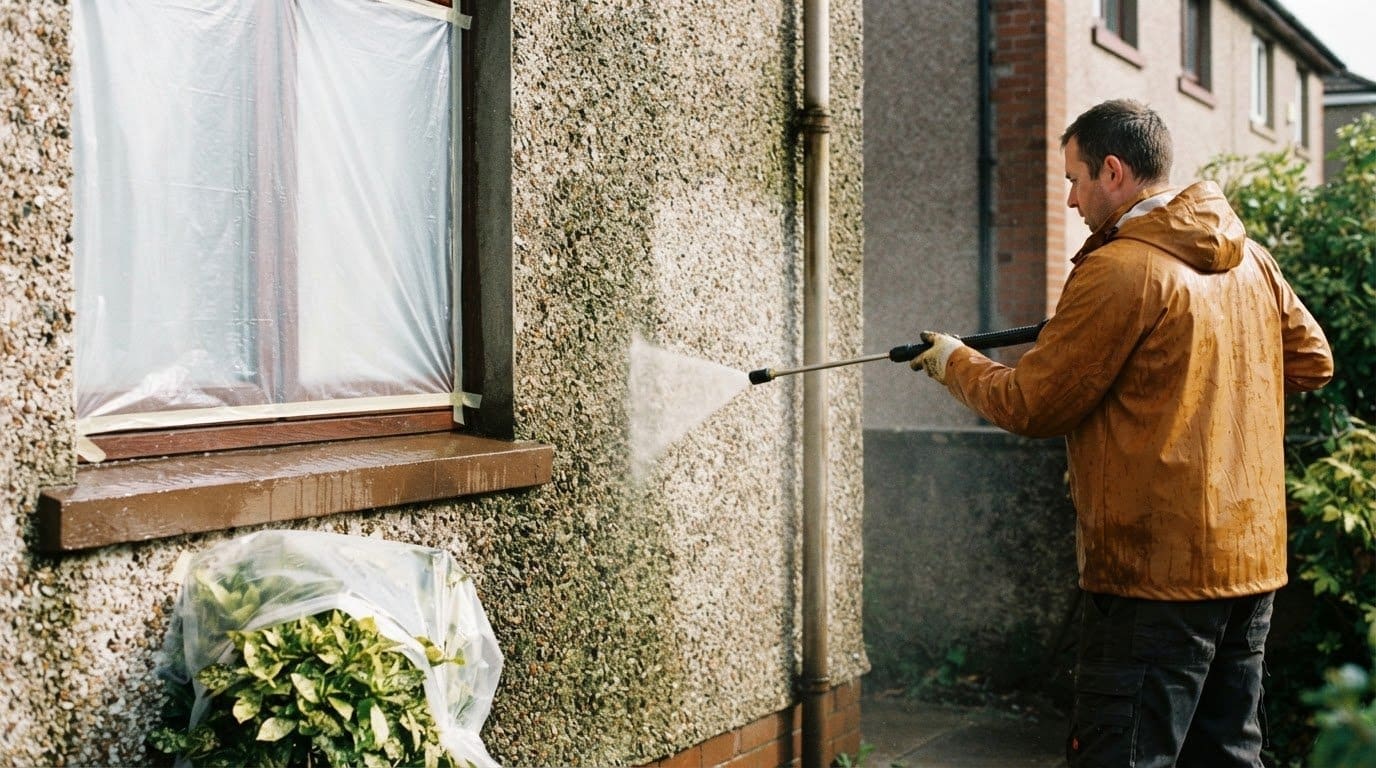


Can steam cleaning be used on exterior surfaces? Yes, high pressure steam cleaning services can treat suitable outdoor materials, but the appropriate heat and pressure depend on the surface. Steam may loosen organic build-up, fouling, graffiti, paint and other stains, while delicate finishes need a more cautious approach.
Consider the material before choosing a cleaning method. A technique suitable for robust paving may not be appropriate for a softer or more sensitive finish, so the surface condition matters as much as the stain.
This guide explains which exterior and delicate surfaces may be suitable, what steam can remove, and what affects the result. It also covers drying expectations and the insurance or cover details to look at before work begins. You’ll get a practical overview of how the process is assessed, where steam cleaning can help, and when another approach may better protect the surface.
Key Takeaways
- Match the cleaning method to both the stain and the surface, as what suits robust paving may be too harsh for a delicate finish.
- Learn which kinds of organic matter, fouling and marks steam may help loosen, and why results depend on the surface.
- Understand why wood and terracotta need a careful approach before deciding whether steam cleaning is suitable.
- Plan around drying: carpets may take up to a full day to dry completely, while sofas may take up to 24 hours.
- Know what to look for in insurance cover and satisfaction terms when arranging an exterior cleaning job.
Removing organic matter, graffiti, paint, fouling and stains
Steam can loosen organic growth and surface grime by combining heat with water. Commercial steam cleaning relies primarily on these two elements, which can reduce the need for cleaning chemicals. Results depend on the material, the stain and how firmly it has bonded. A film of road pollution on masonry, for example, differs from paint absorbed into porous stone.
Algae, moss and lichen often collect on shaded paving, walls and roof edges. Surface growth may lift more readily than roots or residue embedded in cracks. A sensible sequence is to identify the surface, assess the growth, then choose a suitable setting and working distance. Applying high pressure too quickly can disturb fragile pointing, coatings or older masonry.
Graffiti and paint vary, too. A fresh mark on a hard, robust surface may respond differently from old paint that has penetrated brick or stone. Heat may soften some coatings, but can also spread softened material if the method is poorly controlled. Test a discreet patch first, then work in manageable areas. On delicate finishes, reducing pressure or choosing another method may better protect the surface.
Pollution, bird fouling and other stains each need assessment. Greasy marks, mineral deposits and organic residue do not respond identically to heat and water. Bird fouling on a wall may loosen, for instance, while a stain beneath it remains visible. The surface’s age, texture and existing finish all affect the approach. A cleaner-looking patch does not necessarily mean the original material is unaffected.
Outdoor fabrics need a different assessment from paving or brick. Awnings, cushions and covers vary in fibre, dye and finish, so heat may affect their colour or texture. Before treating fabric, identify its material and care guidance, then test a hidden area. Common factors include:
- Organic growth: algae, moss or lichen, including how deeply it sits.
- Surface marks: paint, graffiti, pollution or bird fouling.
- Material: porous stone, coated render, timber or exterior fabric.
- Condition: cracks, loose pointing, faded colour or a worn finish.
For timber, the grain and existing coating matter; the approach used for stone may not suit a deck. The same surface-led thinking applies to decking cleaning. In Edinburgh, careful assessment helps select suitable methods and avoid treating every stain as though it were the same.
Can steam cleaning be used on exterior surfaces?
Yes. Heated water and controlled pressure can clean suitable exterior surfaces, including paving, masonry and some coated finishes. The equipment is adjusted to the material, its condition and the type of soiling. A setting suitable for a robust driveway may damage weak pointing or a worn coating.
Steam cleaning uses heat as well as water pressure; pressure washing mainly relies on a forceful water jet. This affects how each method loosens dirt and treats the surface. Neither method suits every material, so the area should be assessed before choosing.
For a quote, describe the surface, its approximate size, the visible soiling and any fragile areas. Photos can help show access, slopes, nearby planting and drainage. The quote should explain the proposed method and scope. The area, surface condition, access and cleaning requirements influence the price.
A practical cleaning process follows clear steps:
- Assess: identify the material, stains, drainage and signs of damage.
- Prepare: clear loose debris and protect nearby items that heat or water could affect.
- Test: treat a small, discreet patch to assess the surface’s response.
- Clean: work in controlled passes, adjusting the equipment to the surface and soil.
- Review: inspect the result and manage any remaining residue or runoff appropriately.
A reputable UK cleaning company should explain its method, specialised equipment, surface assessment and quote before work starts. Clear answers about the cleaning scope and any limitations help you understand what the service covers.
Commercial cleaning wastewater needs a planned route. Appropriate handling depends on the site, the material removed, any cleaning products and where water drains. The operator should consider drainage before starting and avoid allowing contaminated runoff to reach an unsuitable drain or watercourse. Local environmental and drainage requirements can vary with the discharge route.
Before the appointment, move furniture, pots and vehicles away from the work area. Close nearby windows and doors, and point out vulnerable finishes, loose paving or drains. These steps help the operator protect access routes and plan the cleaning sequence.
In Edinburgh, exterior cleaning can cover driveways, patios, decking, render, roofs, solar panels, uPVC and conservatories. The property’s surface and condition determine the appropriate approach. For local exterior cleaning options, consider the surface that needs attention and the result you want.
Cleaning delicate surfaces such as wood and terracotta
Wood and terracotta need a more cautious approach than dense concrete. Their pores, grain and existing finishes can react differently to heat and moisture. Water can enter cracks in weathered timber, for example, while terracotta tiles can absorb moisture through their unglazed faces. The surface’s condition matters as much as its name.
Start by identifying the material and finish. Painted timber, an oiled deck board and bare softwood are not interchangeable surfaces. Sealed terracotta also differs from unsealed tiles. Look for flaking coatings, open joints, splits, loose pieces and previous repairs. These details help determine whether steam is suitable or another method is preferable.
Heat can soften coatings or affect finishes, while forceful water can raise wood grain or dislodge weak material. On terracotta, excess moisture can enter porous tiles and joints. High pressure should not be the default. A controlled test on a discreet area shows how the material responds before a larger section is treated.
A careful assessment follows a clear sequence: identify the surface, check its condition, then select the method and equipment. Start with a small, hidden patch and inspect for colour change, raised fibres, loosened coating or surface wear. If the test shows damage, stop and choose a gentler approach. Avoid directing concentrated heat or water at joints, edges and existing cracks.
Timber boards with worn paint or visible splits need particular care. On a deck, cleaning along the grain helps avoid unnecessary abrasion. Terracotta requires attention to both tile faces and mortar joints; weak joints can loosen under pressure even when the tile itself appears sound. A sealed surface can also respond differently from an untreated one.
- Timber: note the grain, coating, splits and any raised fibres.
- Terracotta: distinguish sealed tiles from porous, unsealed surfaces.
- Joints: inspect mortar, gaps and edges for weakness.
- Test area: check for colour, texture or finish changes before proceeding.
These checks help prevent cleaning from creating a bigger maintenance problem. A weathered wooden step may need gentler treatment than sound, sealed boards, for example. Terracotta with loose mortar needs different handling from firm, intact tiles. The right recommendation matches the cleaning approach to the actual surface, finish and condition, rather than relying on one setting for every material.

Drying times after steam cleaning
Drying depends on the material, how much water it retains and the conditions around it. A smooth, sloping patio sheds water differently from porous stone or timber joints. Indoor fabrics hold moisture within fibres, so their drying times offer a useful contrast. As professional carpet care providers like Sani-Tech Victoria highlight, carpets may take up to a full day to dry completely after steam cleaning, while a sofa may take up to 24 hours.
Those figures apply to carpets and sofas, not every exterior surface. A hard surface may lose visible water quickly, yet moisture can remain in joints, pores or shaded edges. Terracotta paving and deep mortar joints retain water differently from sealed paving, for example. The material and its condition matter more than how the surface looks immediately after cleaning.
Weather also affects outdoor drying. Air movement and warmth help moisture evaporate, while cool, damp conditions and shade slow the process. A heavily soiled area may need more cleaning attention, but the amount of water left behind depends on the method. There is no single drying time for every driveway, wall or deck.
To plan access after cleaning, consider how the surface is used. Keep foot traffic away from a wet path if it feels slippery, and avoid placing furniture on damp decking. For a cleaned entrance, let the route dry before moving items back. These steps reduce disruption without assuming every material dries at the same pace.
- Check the surface: look for visible water on paving, timber and steps.
- Inspect joints: check shaded gaps where moisture can linger.
- Plan access: keep people and items off damp or slippery areas.
- Assess fabrics separately: carpets may take up to a full day, and sofas up to 24 hours.
Ventilation helps indoor fabrics dry. Open windows where conditions allow, and leave space around a sofa so air can circulate. Avoid covering a damp cushion or returning a carpet to a closed room straight away. These steps support evaporation but do not change the stated drying expectations for carpets and sofas, an aspect that dedicated specialists like Cleaning Guru Carpet and Home Cleaning routinely account for during upholstery treatments.
Before scheduling work, consider when you need to use the cleaned area. A patio used as the main route through a property may need a different work plan from a rarely used garden path. An outdoor fabric cover also needs time to dry before storage. Matching the cleaning plan to the surface and its everyday use makes access easier to manage.
Insurance and satisfaction guarantee
Insurance and a satisfaction guarantee cover different concerns. Insurance relates to specified risks during work; a guarantee describes what happens if the result falls short of agreed expectations. Neither phrase alone explains the scope of cover. A policy may address accidental damage, for example, while a guarantee may concern missed areas or a return visit.
Before a cleaning appointment, read the insurance details alongside the written scope of work. Check that the named business and planned activity match the job. A policy document may describe exclusions, limits and conditions, so those details matter more than a general statement that a team is insured. Keep the quote and written responses with the job records.
A satisfaction guarantee needs equally clear wording. Look for the outcome it covers, the period for raising a concern and the remedy offered. A promise to revisit a missed patch differs from a promise to remove every stain. An old mark on porous stone may remain visible after careful cleaning, for instance, so the agreed standard should describe the work rather than promise an exact appearance.
Use a practical review before work begins:
- Scope: note the surfaces, areas and cleaning method included.
- Insurance: identify the business and activity covered by the policy.
- Exclusions: understand how pre-existing damage or fragile finishes are treated.
- Guarantee: record the remedy and process for raising a concern.
- Evidence: retain the quote, policy details and written agreement.
Photographs can help establish the starting condition. A picture of cracked pointing or a faded timber coating can distinguish pre-existing wear from a change noticed after cleaning. The written scope should also identify delicate sections, such as terracotta steps beside a paved path, so expectations apply to the right areas.
During the final inspection, compare the completed work with the agreed scope. Record any specific area that appears unfinished, such as residue along a wall edge. Clear, prompt communication makes it easier to discuss the concern within the stated process. A thorough record also avoids relying on memory about what the quote included.
Choose written terms that explain both protection and the route for resolving concerns. If you’re arranging exterior cleaning, discuss the cleaning work required and its scope before booking.
Ultimate Clean Solutions: Steam Cleaning
Ultimate Clean Solutions provides steam cleaning for exterior surfaces that need careful, considered treatment. If you’re dealing with built-up grime or organic matter, the right approach depends on the surface, its condition and the type of soiling. Sharing these details helps clarify the work involved and whether steam is suitable for the area.
Steam cleaning can sit alongside practical property maintenance. For example, gutters blocked with leaves and debris may need clearing or unblocking to restore their function. Keeping the cleaning requirement clear helps direct attention to the right task, whether that’s an exterior surface or a drainage issue.
If you’re ready to discuss the work, contact Ultimate Clean Solutions to talk through your exterior cleaning needs.
Plan the next step for your property
Choose the area that matters most and define what a useful result would look like. You might prioritise a frequently used entrance, a stained section of render or an outdoor area that needs attention before regular use. This gives the cleaning discussion a practical focus and helps match the surface to the right approach.
For high pressure steam cleaning services, the material and its condition remain central to planning the work. You can also discuss related exterior maintenance needs. Ultimate Clean Solutions offers Gutter Clearing & Debris Removal, Gutter Unblocking and Gutter Painting to address separate issues around the property.
When you’re ready to discuss the work, contact Ultimate Clean Solutions. A clear starting point is simply the surface or property issue you want to address. From there, you can take the next step with confidence.
Frequently Asked Questions
What are the benefits of steam cleaning services?
Steam cleaning can loosen grime and some organic residue using heat and water, potentially reducing reliance on cleaning chemicals. In Edinburgh, this may suit suitable exterior surfaces where dirt has built up. Its practical benefit is targeted cleaning: the method can be adjusted to the material and soiling. However, it won’t restore damaged finishes or guarantee every stain disappears.
How much do high pressure steam cleaning services cost in the UK?
The cost of high pressure steam cleaning services depends on the job and is provided after a quote request. For exterior work, key considerations include the area to be cleaned, surface condition, access and treatment needed. A small, clear patio differs from a large, steep or heavily soiled area. Share the location and job details to receive a quote for the specific work.
What factors affect the price of professional steam cleaning?
Price usually reflects the surface area, material, level of soiling and access requirements. Cleaning an open paved courtyard involves different preparation from treating a narrow passage beside a building, for example. Stubborn deposits, obstacles and delicate finishes can also affect the work involved. In Edinburgh, provide clear details of the property and surfaces so the quote reflects the cleaning task.
What areas of a home or business can be steam cleaned?
Suitable exterior areas can include hard paving, some masonry and selected building surfaces. The right method depends on the material and its condition, not whether the property is residential or commercial. An entrance path, courtyard or exterior wall may be suitable for assessment. Timber, porous tile and coated finishes need particular care, so each surface should be assessed before choosing an approach.
Are professional steam cleaning companies insured and trained?
Ultimate Clean Solutions has a fully insured team that uses ladders and specialised equipment for exterior property work. Insurance and training are separate matters, so discuss the work and the approach to the surfaces involved. Cleaning a delicate finish calls for a suitable method, not simply powerful equipment. Clear job details help establish the scope of work.
What are the risks of high pressure steam cleaning for different surfaces?
Excess heat or force can damage vulnerable finishes. Timber may develop raised fibres, weak mortar can loosen, and coatings may soften or peel. An old terracotta path with worn joints, for example, could have its mortar disturbed as well as its grime removed. Surface condition, existing cracks and previous repairs all affect the risk. A small, discreet test helps show how the material responds.
How long does steam cleaning take, and how quickly do surfaces dry?
Time on site depends on the area, access, preparation and cleaning method. Drying also varies by material and weather. Indoor carpets may take up to a full day to dry completely, while sofas may take up to 24 hours. For exterior paving, timber or masonry, shade, air movement and moisture retained in joints influence drying. Keep access clear until the surface is safe to use.
What environmental or wastewater rules apply to commercial pressure cleaning in the UK?
Plan drainage before work and keep contaminated runoff from reaching an unsuitable drain or watercourse. Requirements can vary depending on the discharge route, site, material removed and any cleaning products used.