


Black spots on patio slabs are often lichen, which thrives in shaded, damp areas. Knowing how to remove black spots from patio slabs means treating the growth appropriately, then rinsing thoroughly to clear residue. A professional can choose a method suited to the paving instead of relying on pressure alone.
It’s frustrating when dark marks make a patio look neglected, especially when they return after cleaning. The paving material matters: porous natural stone, including Indian sandstone, is more prone to black spots than porcelain or dense concrete. Shade and moisture can also affect how readily lichen takes hold.
This guide explains what causes the marks and how a professional approaches treatment, brushing and rinsing. It also covers why chemical treatments must be used according to their labels, how methods differ for natural stone, and what can help reduce regrowth. You’ll know what to expect from patio cleaning and why one approach may not suit every surface.
Key Takeaways
- Black spots are often lichen, which is more likely to develop in shaded, damp areas.
- Porous natural stone, including Indian sandstone, can be more prone to spotting than porcelain or dense concrete.
- A suitable professional cleaning method depends on the paving surface and the condition of the slabs.
- Careful application and thorough rinsing help remove treatment residue from the patio.
- Cleaning, suitable aftercare and watching for regrowth can help keep the patio looking its best.
What causes black spots on patio slabs?
- Start by noting where the marks appear. Compare shaded corners, areas beneath tables and open paving in direct light. Black spots concentrated in a persistently damp, sheltered patch may indicate lichen growth. Since lichen thrives in shaded, damp conditions, the distribution of marks helps a professional distinguish local growth from general surface grime.
- Look closely at the marks rather than judging by colour alone. Lichen can form firmly attached dark patches that remain visible after loose dirt is removed. Note whether each spot has a defined edge, whether patches cluster together and whether they follow the dampest part of the paving. These details help identify the likely cause before choosing a cleaning method.
- Check the conditions around a marked area. A covered corner or narrow gap beside a wall may receive less sunlight and stay damp longer than exposed slabs. Compare it with a nearby section that dries more readily. This contrast can explain why black marks are unevenly spread, even across paving laid at the same time.
- Separate the visible problem from its setting. Black spots describe what you see, but shade and persistent damp help explain why lichen establishes there. Record nearby features that limit light or airflow, such as a fence or overhanging structure. This gives a clearer picture of the affected zone and helps a professional focus their assessment on more than surface colour.
- Use the pattern to guide your inspection, but don’t assume every dark mark has the same cause. Check the edges of affected patches and compare them with clean slabs nearby. If spots recur in the same shaded, damp location, conditions remain favourable for lichen. If marks are scattered, assess each area separately before choosing a treatment.
How paving material and shade affect black spots
- Identify the paving material before selecting a cleaning method. Porous natural stone, including Indian sandstone, is more prone to black spots than porcelain or dense concrete. Its surface can hold moisture, creating conditions in which lichen may establish. A professional considers the stone type alongside the marks rather than assuming every patio can withstand the same treatment.
- Compare affected slabs with cleaner paving nearby. For example, Indian sandstone beneath a covered seating area may show more spotting than exposed porcelain elsewhere. This difference illustrates how material and local conditions work together. It also helps a professional assess whether one method suits the whole patio or needs adjusting for different surfaces.
- Notice how shade falls across the paving during the day. Areas beside walls, fences or permanent structures receive less direct light and may stay damp longer. Because lichen thrives in shaded, damp conditions, a shaded strip can develop marks while adjacent slabs remain clearer. This pattern helps identify where treatment needs particular attention.
- Match the cleaning approach to the surface. Porous sandstone needs more care than dense concrete because unsuitable treatment or forceful cleaning can affect its appearance. Porcelain has different characteristics again. A professional considers the paving material, the position of the spots and the surrounding shaded areas before choosing how to clean.
- Factor shade into your expectations after cleaning. Removing existing growth addresses the visible marks, but shaded, damp conditions may remain. Paving beneath an overhang, for instance, may dry more slowly than an open section. This helps explain why spots could return sooner in one area than another.
When assessing a patio, consider the pattern of the marks rather than treating each spot as an isolated problem. A concentration in a sheltered or shaded section can indicate that local conditions contribute to the growth. Compare it with nearby paving that receives more light, and note whether the surfaces are made from different materials. These comparisons provide a clearer basis for discussing treatment with a professional. They can also identify sections that may need particular care, without assuming the same approach will suit every slab. Where shade and porous paving coincide, set realistic expectations for the result and how the area may look later.
After cleaning, distinguish the visible marks from the conditions around them. A clearer appearance does not mean a shaded, damp section has become equivalent to a more exposed part of the patio. Compare similar areas and consider whether marks are concentrated where light is limited. This context helps distinguish a local recurrence from a broader change across the surface. It also provides a practical basis for deciding whether to seek further advice, especially if the paving is porous. Make choices that reflect both the material and the setting, rather than expecting the whole patio to respond uniformly. Since lichen thrives in shaded, damp conditions, the local environment remains relevant when assessing the result.
How professionals prepare patio slabs for cleaning
Professionals commonly use purpose-made patio treatments. Many black spot removers contain a strong biocide, often sodium hypochlorite. They avoid applying treatment with a pressure washer and follow the product’s dilution instructions.
- First, assess the paving and affected areas. Identify natural stone, concrete or porcelain, then note joints, edges and nearby drainage. Porous natural stone needs particular care. The professional can then select a suitable treatment and cleaning approach instead of applying the same product and pressure across every slab.
- Next, clear loose debris from the work area. Leaves, twigs and surface grit can obscure black spots or get in the way during cleaning. A clear view of the slabs helps the professional distinguish visible growth from loose dirt and work methodically across the patio without missing affected patches.
- Identify nearby plants, ponds and drains before applying treatment. These features affect how the work area is managed and where rinse water could flow. The professional plans application and rinsing with the surroundings in mind, rather than allowing concentrated product or runoff to collect beside delicate planting or enter a pond.
- Patch-test the treatment on an inconspicuous slab, particularly with natural stone. Follow the product’s dilution instructions and check how the paving responds before treating a larger area. This helps reveal whether the chosen product could alter the surface’s appearance. Avoid unlabelled mixtures and never use a stronger dilution than the instructions specify.
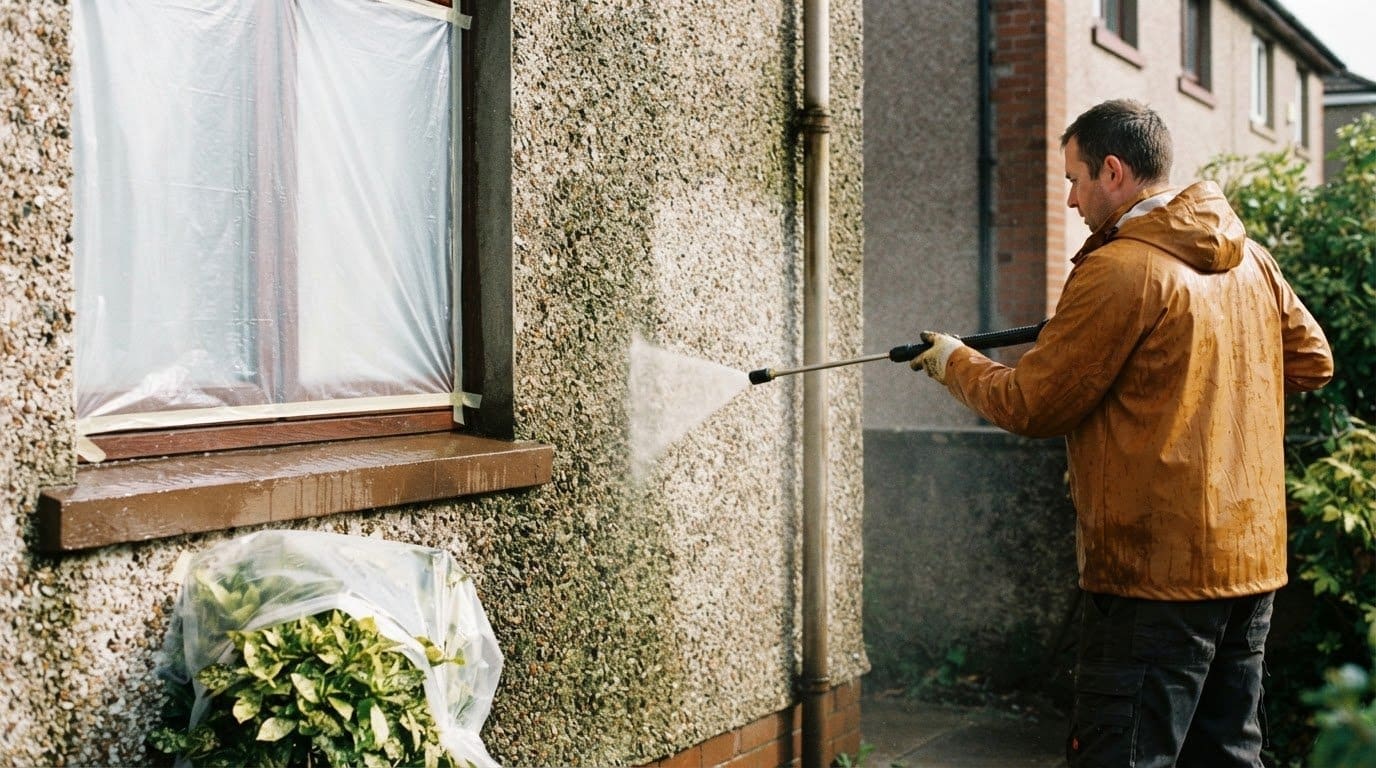
- For general pre-washing, use a low or wide fan pressure-washer setting. Keep a high-pressure, narrow jet away from black spots, as concentrated force can be too aggressive for the surface. Specialists such as Moores Pressure Washing LLC similarly advise using controlled, lower-pressure spray patterns on paving to prevent surface etching or joint damage. Pre-washing should prepare the slabs, not replace the treatment selected for lichen. The professional adjusts the method to suit the paving and its condition.

How professionals remove black spots: brushing, dwell time and rinsing
Professionals adapt treatment to the paving, whether it’s natural stone, sandstone, concrete or porcelain. They combine careful brushing, application according to the product label and thorough rinsing.
-
How Professionals Brush the Slabs
Brush affected slabs to loosen surface debris and expose the marks. This helps the professional see where the treatment needs to reach, rather than just cleaning away loose dirt. For anyone asking how to remove black spots from patio slabs, brushing is one part of a considered process, not a substitute for a suitable cleaner. The professional avoids harsh scrubbing that could mark delicate paving or disturb joints.
-
How Long Professionals Allow the Cleaner to Dwell
Apply the treatment evenly and follow the dwell time stated on its label. A chemical patio black spot treatment commonly needs a couple of hours, but products vary, so the label determines the correct timing. Professionals also follow dilution instructions and patch-test first, particularly on natural stone. This keeps the process guided by the product rather than guesswork or leaving cleaner on longer than directed.
-
How Professionals Rinse the Slabs
Once the label’s dwell time has passed, rinse treated slabs thoroughly with clean water. This removes chemical residue and dilutes runoff before it reaches plants, a pond or a drain. For those considering how to remove black spots from patio slabs safely, rinsing is an essential step. Professionals work methodically across the surface, including edges and joints, while avoiding a high-pressure, narrow jet aimed at the marks.
Brush to expose the marks, then apply the cleaner according to its label. Once the stated dwell time has passed, rinse the slabs. Keeping these steps distinct prevents extra scrubbing or a longer wait from being treated as a substitute for the product directions. Professionals can adjust their approach for the paving material, taking particular care with natural stone and patch-testing where appropriate. During rinsing, direct clean water over the treated surface, including its edges and joints, so residue does not remain. Also dilute runoff before it reaches plants, a pond or a drain. Rinsing is part of the treatment, not an optional tidy-up.
A homemade white vinegar and baking soda paste is another method for treating black spots on patio slabs. Leave it on the spots for at least fifteen minutes before scrubbing and rinsing. This timing applies to the paste; it does not replace the dwell time on the label of a professional cleaner. After scrubbing, rinse the slabs thoroughly with clean water to remove residue and dilute runoff before it reaches plants, a pond or a drain. Whichever method you use, allow the treatment its stated time, then scrub where required and rinse thoroughly. This keeps the paste’s waiting period distinct from the label-led timing for professional products.
How professional cleaning can help prevent black spots from returning
Cleaning removes existing growth, while aftercare can help reduce the conditions that favour new spots. These steps help protect the patio over time.
- Ask the professional to assess the paving after cleaning. Porous natural stone, such as Indian sandstone, may need different aftercare from porcelain or dense concrete. The assessment should consider the surface, remaining marks and shaded areas, so recommendations reflect the actual patio rather than applying one approach to every material.
- Consider sealing porous natural stone once the cleaned patio is fully dry. Sealing can reduce the chance of lichen spores rooting in the stone. Timing matters: applying sealer before the slabs are fully dry does not follow the recommended aftercare sequence. The professional can consider the stone type and drying condition when giving advice after cleaning.
- Keep shade in mind when planning future maintenance. A covered corner or strip beside a wall may stay damp longer than open paving, and those conditions can still favour lichen after cleaning. Tell the professional which areas stay shaded or show recurring marks, so they can include them in a future assessment instead of treating the patio as uniformly exposed.
- Look for early regrowth during spring and autumn garden tidy-ups. These are useful times to notice fresh spots before they become established patches. Pay particular attention to shaded sections and porous stone. If new marks appear, note their location and when they became visible. This information helps a professional distinguish recurring growth from areas that remained marked after treatment.
- Plan future cleaning around the patio’s material and condition, not just the calendar. Recurring growth beneath an overhang, for instance, may need closer attention than clear, exposed porcelain. A professional can use the surface and its exposure to guide the next cleaning approach. This makes aftercare practical and avoids assuming one treatment suits every slab.
Where recurring moisture or poor airflow persists due to garden grading, surrounding structures, or soil retention, addressing the wider layout can also make a significant difference. Hardscaping specialists such as Landscape By Design Of Palmetto demonstrate how purposeful outdoor design and proper retaining walls can improve drainage, helping to reduce the damp conditions that encourage organic growth on paving.
Ultimate Clean Solutions: Patio Cleaning
Ultimate Clean Solutions provides patio cleaning for homes and businesses in Edinburgh where black spots affect the paving’s appearance. The service can suit property owners when marks cover a broad area, keep returning or remain after routine surface cleaning. The right approach depends on the slabs’ material and condition, especially where porous natural stone needs careful treatment.
For property owners considering how to remove black spots from patio slabs, a professional assessment helps match the method to the surface. Indian sandstone, porcelain and dense concrete respond differently to cleaning. The location of the spots matters too: lichen in a sheltered corner may need different attention from general dirt across exposed slabs.
Removing black spots involves more than directing pressure at them. The cleaning method and management of treatment residue both matter. A narrow, forceful jet, for example, can be unsuitable, while a controlled approach helps protect the paving. Ultimate Clean Solutions uses eco-friendly, biodegradable products for exterior cleaning.
Professional patio cleaning can help when black spots make an outdoor seating area look uneven or the patio has different slab types. Knowing how to remove black spots from patio slabs also means considering aftercare. Sealing fully dry porous natural stone can help reduce the chance of lichen spores rooting there.
Details such as the paving material, where the spots appear and whether they recur can help explain the issue. Mention shaded sections or areas that stay damp, too. If you’re unsure whether the slabs are sandstone, porcelain or concrete, describing their appearance and location still provides useful context.
To discuss black spots and your paving, contact Ultimate Clean Solutions.
Frequently Asked Questions
What’s the active ingredient in patio black spot remover?
Many commercial patio black spot removers use a biocide, commonly sodium hypochlorite, to break down lichen. Ingredients and concentrations vary by product, so follow its label. A professional selects a treatment suited to the paving instead of assuming one formulation suits every slab. This matters particularly when the patio includes natural stone or several different paving materials.
What causes black spots on patio slabs in the UK?
Black spots are often lichen, which thrives where paving stays damp and shaded. In an Edinburgh garden, marks may appear beneath an overhang while exposed slabs remain clearer. Porous natural stone, including Indian sandstone, is more prone to spotting than porcelain or dense concrete. The location and paving type together help explain why patches appear unevenly across one patio.
How does a professional remove black lichen spots from patio slabs?
A professional assesses the paving, applies a suitable treatment according to its label, allows the stated dwell time, then rinses the surface thoroughly. The approach should account for details such as sandstone edges, joints and nearby planting. An inconspicuous patch test, for example, helps assess the treatment on natural stone before wider application. Rinsing clears residue from the treated area.
Which patio cleaners do professionals use for black spots: oxygen bleach, sodium hypochlorite or specialist products?
Professionals commonly choose a specialist patio treatment intended for black spot removal; many commercial products use a biocide such as sodium hypochlorite. Oxygen bleach should not be assumed to work in the same way or suit every slab. Follow the product label for use and dilution, and consider the paving material when selecting a treatment. A patch test is particularly relevant before treating natural stone.
Can a professional use a pressure washer to remove black spots from patio slabs without damaging them?
Professionals can use a pressure washer for general pre-washing, but a low or wide fan setting is preferable. A high-pressure, narrow jet aimed at black spots can be too aggressive for the paving. Professionals use the washer cautiously and select a separate treatment where needed. This distinction matters on natural stone, where concentrated force may affect the surface.
How long do professionals leave patio cleaner on slabs, and how many treatments are usually needed?
A chemical treatment commonly dwells for a couple of hours, but the product label sets the correct time. No single number of treatments suits every patio: the paving type, condition and extent of lichen all affect the cleaning process. A professional follows the product instructions and assesses the result rather than automatically applying another dose.
What protective equipment and precautions should a professional use when cleaning patio slabs?
A professional follows the cleaner’s label for handling instructions and any protective equipment it specifies. They also plan application and rinsing around nearby plants, ponds and drains, since treated runoff needs dilution before it reaches them. On a patio beside a pond, for example, managing rinse flow is part of preparing the work area, not an afterthought.
How can professional cleaning and aftercare help prevent black spots and lichen from returning on patio slabs?
Professional cleaning removes existing growth, while sealing fully dry porous natural stone can reduce the chance of lichen spores rooting there. Aftercare should reflect the patio’s material and exposure. Sandstone beneath a covered area, for instance, may need closer attention than open porcelain. Spotting early regrowth during routine garden upkeep helps identify affected areas before patches become more established.