


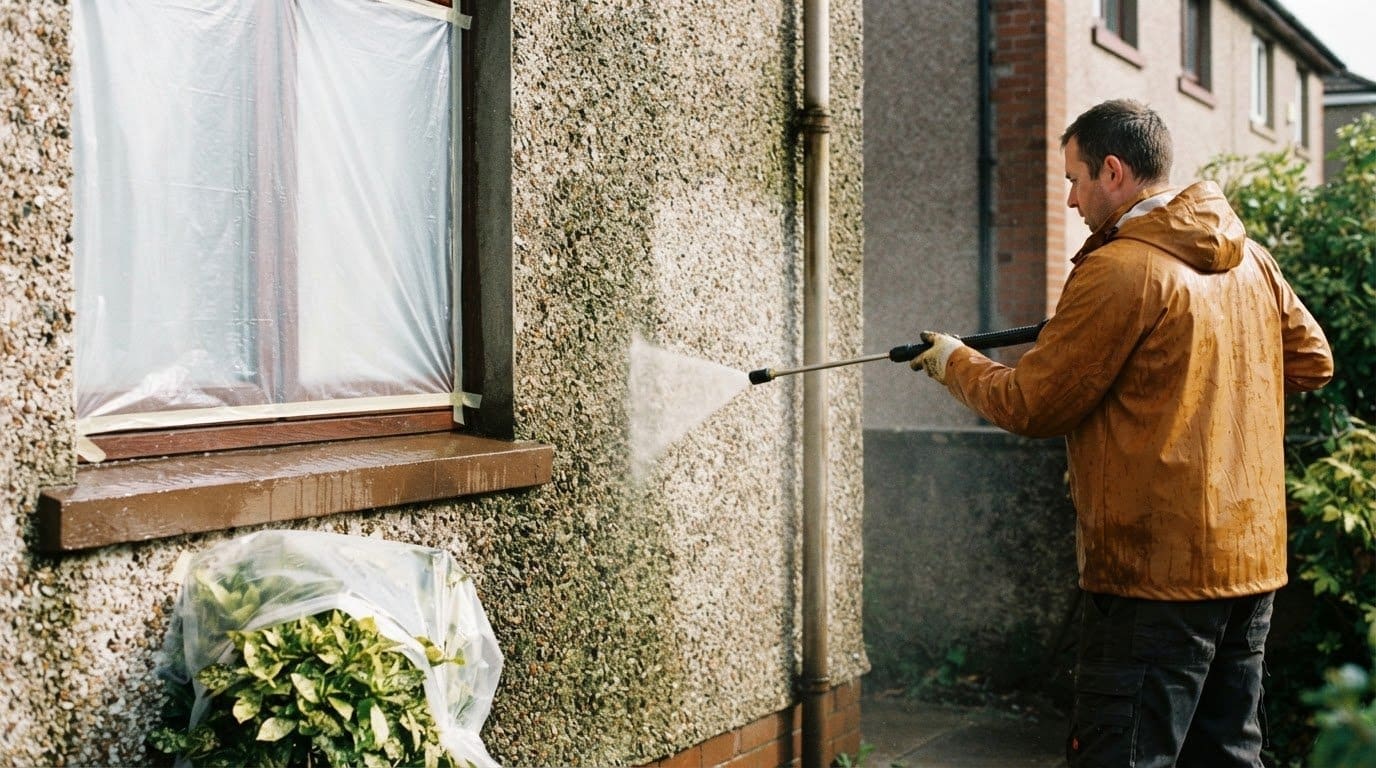
A pressure washer shouldn’t be your first choice when deciding how to clean pebble dash render. Begin by hosing off loose dirt, then use soapy water and a bristle brush before rinsing the wall and letting it dry naturally.
This gentler method is a practical starting point for everyday dirt and grime. For algae, moss or lichen, softwashing may be more suitable: apply a surface-appropriate cleaning solution at low pressure to treat the growth without forceful rinsing. Stubborn patches may need further treatment.
This guide explains how to assess the render before cleaning, protect nearby plants, windows and doors, and choose between soapy water and softwashing. You’ll also learn how to rinse carefully and why cleaning nearby paths can help reduce the chance of spores returning to the render. The best method depends on the surface and the type of growth, so work gently and methodically.
Key Takeaways
- Start with the gentlest suitable cleaning method, and reserve softwashing for growth that soapy water may not shift.
- Before cleaning, look for cracks, loose stones and other damage, and protect nearby plants, windows and doors.
- If using a gentle pressure washer to rinse the wall, keep it at least 30 cm from the surface.
- Clean nearby paths as well as the render to help reduce the chance of spores recontaminating the wall.
- Choose a surface-suitable cleaning product and rinse methodically to remove dirt and residue without stressing the render.
Why Choose Softwashing for Pebble Dash Render Cleaning?
For a listed building or a property in a conservation area, exterior work may need particular care. Before changing the finish or carrying out repairs, ask the local council’s conservation team whether the planned work needs consent.
- Choose low pressure to protect the roughcast. Pebble dash and roughcast have a textured surface, with stones bonded into the render. A forceful pressure-washer jet can dislodge loose stones, damage weak areas and drive water into existing cracks. That can leave the wall rougher or expose vulnerable patches rather than simply removing dirt. Start by assessing the surface and brushing away loose debris. If rinsing with a pressure washer, keep the nozzle at least 30 cm from the wall and use a gentle setting. A hose is a more controlled option for ordinary dirt.
- Apply cleaning solution gently. Softwashing uses a suitable façade cleaner or mild detergent solution, applied with a low-pressure garden sprayer. This allows the solution to reach recesses between stones without blasting the surface. Check first that the product is suitable for the render and won’t cause discolouration. Apply it evenly, following the product instructions, and keep it off nearby plants, doors and windows. Low-pressure application doesn’t mean leaving residue behind, so rinse as directed if the product instructions call for it.
- Give the treatment time to work. A cleaning solution for pebbledash is typically left to dwell for 15-30 minutes before scrubbing, depending on its instructions and the surface. Don’t let it dry on the wall. For algae or lighter growth, a soft brush may help loosen the residue without pulling stones from the render. If persistent lichen remains after treatment, a very gentle pressure wash or another treatment may be needed. Avoid concentrating the jet on one patch, as this increases the force on that area.
- Rinse and assess the result. Use a hose or low-pressure rinse to wash away loosened dirt and cleaning residue, working methodically from the top down. Inspect the wall once it has dried; wet render can make remaining marks harder to judge. Treated wet dash may clean gradually through natural weathering, and the surface may take 6-12 months to become mostly restored. For a suitable method and careful application, softwashing for exterior surfaces offers a lower-pressure alternative to aggressive washing.
Treating surrounding paths to reduce recontamination
Cleaning the wall alone may leave growth on nearby paths. Treating both surfaces can help reduce the chance of spores reaching the render again.
- Clean the nearby paths as part of the same job. Start with paving directly beneath the wall, then work outwards to adjoining paths where moss or algae is visible. Organic growth on these surfaces can release spores that reach the render, so removing it helps reduce one source of recontamination. Use a cleaning approach suited to the path material; porous paving and smooth slabs may need different handling. Keep the work controlled around drains, planted borders and doorways, and avoid pushing loosened debris back towards the wall. If the render and path need attention together, render cleaning in Edinburgh can address the wall as part of the wider exterior-cleaning task.
After washing, rinse away loosened dirt and treatment residue as directed by the product instructions. Check path edges, joints and shaded sections, where damp debris can remain after the main surface looks clean. Treating those patches too can help reduce spores returning from around the property. Don’t assume a clean-looking path is the only relevant area: inspect the route beneath gutters and the ground beside walls, where runoff may leave deposits.
-
Apply treatments to reduce regrowth
For stubborn moss, algae or lichen on the render or nearby paths, use a suitable fungicidal wash containing biocides. Apply it only to surfaces specified in the instructions, and follow the stated method and dwell time. Prevent the treatment from running into planted areas or onto unsuitable materials. A biocide can treat growth, but it won’t remove conditions that encourage damp patches, such as persistent shade or debris.
For example, clear leaf build-up from a shaded path before treating visible growth. This exposes the affected surface and removes debris beside the wall.
-
Plan how often to clean
There’s no single cleaning interval that suits every UK property. Inspect the render and nearby paths periodically, and arrange cleaning when visible algae, moss, lichen or dirt begins to build up. Shaded walls and damp corners may show growth sooner than exposed areas, making them useful places to check.
Don’t repeat a chemical treatment just because a set time has passed. First check whether growth has returned and whether the product instructions permit another application. A targeted approach avoids unnecessary treatment and focuses on visible regrowth.
Assessing damage and protecting nearby surfaces
Repair cracks, loose stones and missing areas before cleaning. Repaint only when the render is sound and clean. Inspect the wall and nearby surfaces first, because washing damaged render can worsen defects or spread debris.
-
Assess the render for damage
Walk around the wall and inspect the whole surface before applying water or cleaning solution. Look for cracks, loose stones, missing patches and areas where the render sounds or appears unstable. Pay particular attention to corners, window surrounds and the lower wall, where damage can be easy to overlook. Mark each damaged area so it can be repaired before washing begins.
Cracks and defects can let water into the wall, contributing to internal damp and winter freeze-thaw damage. If the render is broken or stones are coming away, address the damage first rather than trying to clean through it. Cleaning removes dirt and biological growth, but it can’t replace missing material or secure loose stones. If the surface is sound but still looks tired after cleaning, repainting may be appropriate.
-
Protect nearby surfaces
Cover plants, windows and doors before cleaning pebble dash. This helps protect leaves and painted or glazed surfaces from cleaning solutions, loosened stones and dirty rinse water. Secure covers so they don’t blow against the wall or leave gaps beside frames. Move portable items away, and protect nearby surfaces that could be marked by runoff.
Before starting, check where water will flow from the wall. Keep doors and windows closed, and watch for gaps where spray or debris could get inside. If you use a cleaning product, follow its directions for nearby surfaces and prevent it collecting on covered plants. Remove covers carefully after rinsing so trapped debris doesn’t fall back onto the render or windows. Exterior maintenance specialists like Sabrina’s Window Cleaning recommend scheduling a dedicated window and frame clean once wall washing is complete to lift any residual water marks or fine grit.
- Separate cleaning from repair and painting. Once you’ve identified damage, decide whether the wall is suitable for cleaning or needs repair first. Fill areas that need attention with exterior filler before painting, and repair missing stones rather than covering them with paint. Painting over loose material can hide a defect without fixing it. If you plan to repaint, check again for cracks and damage after cleaning, when dirt no longer obscures the surface.
- Recheck the wall before choosing the next treatment. Once the surface is dry, look for remaining marks, newly visible cracks and loose stones. A clean wall can reveal defects that grime previously concealed. Repair any damage before applying masonry paint or another finish. If the render is sound, choose the next step according to its condition: cleaning addresses surface contamination, while repair or repainting addresses physical damage or a worn finish. For homeowners pursuing a complete exterior overhaul, specialist restoration contractors such as Crandall Painting & Stucco advise ensuring that all patching and surface repairs have fully cured before applying protective coatings.

Cleaning dirt, stains and algae from harling, render and roughcast
- Remove loose dirt before wet cleaning. Brush away cobwebs, leaves and loose debris with a stiff-bristled brush. Use controlled strokes in several directions, following the texture rather than scraping across the stones. For example, brush around window edges before clearing the broader wall surface. This stops dry debris mixing with water and becoming harder to remove. Use only enough pressure to lift surface dirt, and stop if stones move or the render crumbles.
Harling, roughcast and pebble dash have uneven surfaces where dirt can collect between raised stones. Clear these recesses gently and don’t force the brush into weak areas. A clean, dry brush also helps you see whether marks are loose grime or more persistent staining.
- Choose a cleaner suited to the finish. Use a façade cleaner or mild detergent that’s suitable for the render and won’t cause discolouration. Read the directions first, as cleaners differ in how they should be mixed and used. If the wall has painted sections, test a small, inconspicuous area. Don’t mix cleaning products or assume a detergent made for paving is suitable for a rendered wall.
Apply the solution evenly with a low-pressure garden sprayer, directing it into dirty recesses without flooding the surface. Work in manageable sections, such as one wall panel at a time, so you can monitor the cleaner and follow its instructions.
- Loosen marks without scouring the render. For surface dirt and light stains, brush after applying the cleaner. Use short, controlled strokes and change direction to reach grooves between stones. Don’t use a metal brush or scrape at dark patches, as either can scratch the finish or dislodge aggregate. If algae remains, identify it as biological growth rather than ordinary dirt before choosing a treatment, since brushing alone may not remove established growth.
For stubborn moss, algae or lichen, a targeted fungicidal wash containing biocides can treat the affected area. Follow the product directions and focus treatment on visible growth.
- Rinse methodically and inspect the result. After scrubbing, rinse with clean water, ideally using a hose at moderate pressure. Start at the top and work down so dirty water doesn’t flow over sections you’ve already rinsed. Watch around windowsills and wall edges, where loosened grime can collect. Inspect the render from different angles after rinsing; remaining stains may be easier to assess as the surface dries.
If marks persist, don’t scrub harder. Reassess whether they’re ingrained stains, algae or signs of damage, then choose an appropriate next step. A roughcast wall should retain its stones and texture after cleaning, without fresh chips or bare areas.
Cleaning pebble dash with a hose and soapy water
If you’re deciding how to clean pebble dash render, start with a hose, mild soapy water and a bristle brush. This practical approach suits everyday dirt and lets you work in controlled sections without relying on forceful washing.
-
Wet the pebble dash with a hose
Use a garden hose to wet the pebble dash wall, working from the top down. A steady, moderate flow helps soften surface dirt and loosen dust between stones. Avoid aiming a concentrated jet at one spot, as force can disturb loose aggregate or drive water into existing cracks.
Wet one manageable section at a time, such as the area around a window, before moving along the wall. Check that water drains freely and doesn’t collect around openings or damaged patches. If stones start moving, stop and reassess the surface instead of increasing the pressure.
-
Wash with soapy water
Mix mild detergent with water according to its label, then apply it with a soft or medium-bristled brush. Work the soapy water into the texture with controlled strokes, including the grooves where dirt settles. Don’t scrub aggressively or use a wire brush, as either can loosen stones or mark the render.
Clean one section at a time so the detergent doesn’t dry before rinsing. For example, brush around a doorway and rinse that area before moving on. If a stain remains, repeat the gentle brushing rather than scraping it. Knowing how to clean pebble dash render carefully means adjusting your effort to the surface, not forcing a stubborn mark.
- Rinse away soap residue. Use clean water from a hose and rinse each section methodically from top to bottom. Pay attention to recesses between stones, where detergent and loosened grime can linger. Keep the flow moderate and don’t direct water into cracks, damaged render or gaps around frames. Continue until the runoff no longer looks soapy or dirty.
Check the lower edge of each washed section before moving on. Residue can attract fresh dirt or leave visible marks as the wall dries. If runoff splashes onto paving, rinse the affected area rather than letting dirty water dry there.
- Let the wall dry naturally and inspect it. Leave the pebble dash to dry in the open air, then assess the result once the surface is no longer wet. Moisture can make remaining stains difficult to judge. If everyday dirt has lifted but algae or lichen remains, soapy water may not be enough; a suitable targeted treatment may be needed.
Keep the method gentle throughout. If the surface has persistent staining or is difficult to reach safely, arrange professional render cleaning for a suitable cleaning approach.
Ultimate Clean Solutions: Render Cleaning
Ultimate Clean Solutions provides render cleaning for pebble dash and other rendered exterior surfaces. It’s a practical next step if dirt, algae or lichen remains after gentle cleaning, or if the wall’s texture makes careful work difficult. The cleaning method can be matched to the surface and the type of soiling, helping avoid unnecessary force on the render.
If blocked gutters are contributing to dirty runoff down the wall, gutter clearing or unblocking may also help address the source. For render cleaning in Edinburgh, contact Ultimate Clean Solutions to discuss your property.
Plan your next exterior-care step
Knowing how to clean pebble dash render starts with choosing a method that suits the wall’s condition. If you’re unsure whether a mark needs cleaning or the render needs repair, don’t rush into a stronger treatment. A careful assessment can help you decide what to address first and whether the work is manageable with a hose and brush.
It’s also worth considering how rainwater reaches the wall. Blocked gutters can contribute to dirty runoff, so gutter clearing and unblocking can support a broader exterior-maintenance plan. Ultimate Clean Solutions also offers gutter painting as part of its exterior-care services.
If you’d like help with the render or related exterior cleaning, contact Ultimate Clean Solutions to discuss the next step for your property. A clear plan can make it easier to care for the finish and keep your home looking well maintained.
Frequently Asked Questions
What tools and cleaning products are suitable for pebble dash render?
Use a garden hose, a stiff-bristled brush for loose debris and a softer-bristled brush for washing. Choose mild detergent or a façade cleaner labelled as suitable for the render, and follow its directions for dilution and use. Keep a bucket and clean water ready for rinsing. Avoid metal brushes, abrasive pads and products that could discolour the wall, particularly on painted sections.
Can you use a pressure washer on pebble dash, and what pressure is safe?
A pressure washer can be used cautiously, but keep it on a gentle setting and hold the nozzle at least 30 cm from the wall. Start with a small test area and watch for stones moving or water entering cracks. Don’t use a concentrated jet to tackle stubborn dirt. If the render is cracked, loose or crumbling, avoid pressure washing that area until it has been repaired.
How do you remove algae, moss, mould and lichen from pebble dash?
For biological growth, use a suitable façade cleaner; stubborn moss, algae or lichen may need a targeted fungicidal wash containing biocides. Apply it according to the product instructions, then inspect the treated area before deciding whether further treatment is needed. Don’t scrub growth aggressively, as the brush can loosen stones. Keep the treatment away from plants and surfaces it isn’t intended for.
How do you clean stains and dirt from pebble dash without damaging it?
Start with dry brushing to lift loose dust and cobwebs, then wash a small section with mild soapy water and a bristle brush. Use short, controlled strokes rather than scraping at stains. Rinse the section with clean water and let it dry before assessing the result. If a mark remains, identify whether it’s dirt, biological growth or surface damage before choosing another treatment.
What are the risks of cleaning pebble dash render, including loose stones and water ingress?
Forceful washing or harsh scrubbing can dislodge stones, damage weak render and drive water into cracks. Water entering damaged areas can contribute to damp inside the property and freeze-thaw damage in cold weather. Before cleaning, look for cracks, missing stones and crumbling patches. Stop if stones start to move, and repair defects before washing rather than trying to clean through them.


