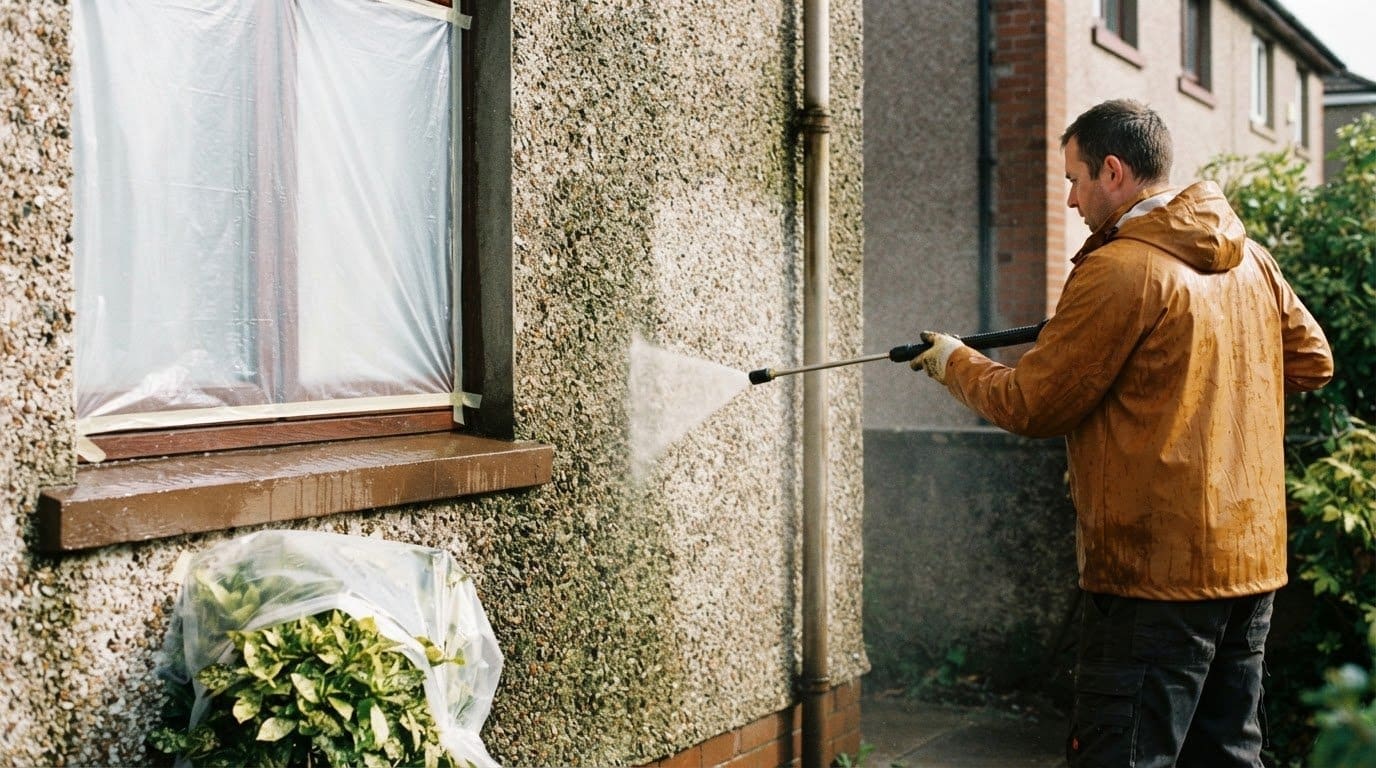


A pressure washer may seem like the quickest way to clear roof growth, but it can damage tiles and push water and debris into unwanted areas. For how to remove lichen from roof tiles safely, professionals first assess the roof, then choose a suitable low-pressure treatment rather than relying on forceful washing or scraping.
It’s understandable to want a clean roof and to know what the work involves. Light moss or lichen can be part of a roof’s natural ageing, while heavier growth may keep tiles wet and affect water flow. The right approach depends on the roof’s condition, the type and extent of growth, and safe access.
This guide explains how professionals inspect roof tiles, prepare for treatment, apply a suitable cleaner and manage runoff. It also sets realistic expectations: treatment works over time, so growth may break down gradually rather than disappear straight away.
Key Takeaways
- North-facing slopes, shallow pitches and shaded areas beneath solar panels can encourage growth by staying damp for longer.
- Assess whether growth is heavy enough to affect water flow or keep tiles wet before deciding on treatment.
- Suitable roof cleaner needs careful handling, with runoff managed to help protect plants, animals, gutters and outlets.
- Professionals may use careful manual preparation followed by a low-pressure treatment for heavy moss and lichen.
- Expect treated growth to break down over time; the roof’s condition, the amount of growth and the weather all affect the visible result.
How do professionals remove moss or lichen from a roof?
In the UK, permission can depend on the property and proposed work, so ask the professional to explain what applies. A risk assessment should consider roof access, tile condition and treatment runoff. Pressure washing can damage tiles and force water, chemicals and debris into outlets.
-
Ask for a roof-specific assessment
Ask the professional to inspect the tile type, condition, pitch and amount of growth before recommending a cleaning method. An approach that suits one roof may be too harsh for another, particularly if tiles are already loose or damaged. Ask how they will manage access and protect gutters, outlets, nearby plants and animals from runoff.
-
Check treatment and scraping risks
Ask which chemicals the professional plans to use and how they will handle them safely. A toxic wash can harm plants and animals, so the work should include runoff controls and protection for gutters and outlets. Hand scraping also requires care, as excessive force can damage roof tiles or slates. Don’t attempt to access the roof yourself to remove growth.
-
Allow treatment to dwell and weather naturally
Ask how the cleaner works and how long results may take to show. A suitable low-pressure biocidal treatment kills and breaks down organic growth without extreme pressure or abrasive cleaning. It can start taking effect within a few days, while rain and natural weathering gradually loosen and carry away dead growth.
-
Set expectations for treatment results
Agree on a realistic result before work begins. Lichen can cling to tiles, so some traces may remain while the growth breaks down over time. The roof’s appearance can change within a few weeks, depending on the existing growth and roof condition. Ask how the professional will explain progress and any remaining marks.
-
Consider the risks of pressure washing tiles
If pressure washing is suggested, ask why it suits your roof. Forceful cleaning can damage tiles and drive water, chemicals and debris across the roof or into outlets. Softwashing applies a suitable treatment at low pressure, without pressure washing or abrasion. Household vinegar should not be assumed suitable. Ask the professional to explain the chosen cleaner, how it will be applied and how runoff will be controlled.
Roof conditions that encourage moss and lichen
- Note which roof slopes stay shaded for longer. North-facing elevations receive less direct sunlight, so their tiles can remain damp and encourage moss, algae and lichen. Overhanging branches can add shade and leaf debris. A professional assessment can establish whether growth is localised or widespread across shaded roofing.
- Consider how the roof’s pitch affects drying. Shallow roofs tend to hold moisture longer than steeper roofs, creating favourable conditions for growth. Compare affected areas with sunnier slopes: growth concentrated on shaded or shallow sections may point to prolonged dampness. Where practical, trimming overhanging branches can reduce shade.
- Assess whether growth is affecting drainage, not just the roof’s appearance. Light or moderate moss and lichen can be part of a pitched roof’s natural ageing and usually don’t harm tiles or slates. Heavy growth, however, can impede water flow and keep the roof covering wet for longer, increasing the risk of leaks and accelerating tile deterioration.
- Ask the professional to assess loose moss and accumulated debris before treatment. For heavy growth, careful manual preparation followed by low-pressure biocidal treatment can remove loose material and treat remaining organic growth. Scraping requires care, as forceful contact may damage tiles or slates. The approach should account for tile condition, roof pitch and debris management.
- Include any solar panels in the roof assessment. Moisture and debris can collect in shaded spaces beneath panels, allowing moss and lichen to develop there. A professional can consider these areas when assessing roof growth and treatment access. If the panels also need attention, professional solar panel cleaning addresses a related part of the roof’s exterior maintenance.
- Use the pattern of growth to guide your next decision. Growth concentrated beneath panels, for example, may point to a local damp area where debris collects. Growth across a shaded, north-facing slope suggests a broader exposure issue. A professional can assess whether treatment is appropriate or whether loose debris and drainage need attention first, rather than cleaning solely to change the roof’s appearance.
When considering likely causes, look at the roof’s shape, nearby branches and panel shadows together. Shallow roofs tend to stay damp longer and may attract moss and lichen more readily than steeper roofs. Trimming overhanging branches can reduce shade and help prevent growth on roof tiles. These observations can focus an assessment on areas likely to stay damp, including shaded spaces under roof-mounted solar panels where moisture and debris can collect.
Why should I clean my roof?
Clean a roof when heavy growth affects drainage or keeps the covering wet, rather than for appearance alone. There’s no single best season for lichen treatment: the practical requirements are a dry roof and calm conditions for applying it.
- Ask for an assessment before agreeing to roof cleaning. A professional should consider the tile or slate condition, roof pitch, growth levels and drainage. Heavy moss can impede water flow, keep the roof covering wet for longer and increase the risk of leaks or tile deterioration. Light growth, by contrast, is often part of the natural ageing of a pitched roof.
- Choose a method that suits the roof, not simply one that changes its appearance fastest. A pressure washer or forceful scraping can remove growth quickly but may also damage tiles. A residual-action treatment works on organic growth over time, with weathering helping to clear it. Ask the professional why the proposed method suits your roof’s condition and the growth present.
- Use clear questions to assess the professional’s advice. Ask what the work includes, how runoff will be controlled, what result to expect and how the tiles will be protected. The Consumer Rights Act says UK companies must exercise reasonable care and skill when carrying out work and advising consumers. Avoid agreeing to unnecessary work or exaggerated claims about treatment effectiveness.
- Seek an independent surveyor’s assessment before deciding whether the roof needs cleaning and can withstand it. Once you know what work is appropriate, obtain three quotes from reputable companies. Advice to consumers should also be supported by professional liability insurance, which protects against negligent or incorrect advice. Compare the proposed methods and protection measures, not just promises of a rapid visual result.
- Plan around safe application conditions rather than choosing a month by habit. Treatment products should be applied to a dry roof in calm conditions. For example, postpone a planned application if the roof is wet or it’s windy. A professional can explain whether physical removal or residual treatment better suits the roof, then set expectations for gradual changes in appearance.
For a roof over two storeys high, professional treatment is recommended. Regular maintenance includes checking for broken or loose tiles, checking gutters and downpipes, and removing accumulated organic material.

How professionals dilute and apply roof cleaner
Professionals match the dilution and coverage to the cleaner’s label, roof area and growth. They plan application around moisture, weather and runoff rather than using a stronger mix to speed up results.
- Measure the roof area and identify the product’s stated application rate. The supplied rate is 1 litre for every 4 square metres. For example, a measured 20-square-metre area requires 5 litres of mixed solution at that rate. This calculation estimates coverage, not the amount of concentrated cleaner; the product label sets dilution.
A professional should account for the tile surface and growth when planning coverage. Ask them to explain how they calculate the mixture required and how they follow the product instructions. A more concentrated solution is not necessarily more effective; using chemicals incorrectly can increase risks without improving results.
- Schedule application for a dry roof and calm conditions. Moisture on tiles can affect how evenly the cleaner reaches the growth, while wind can carry spray beyond the intended area. The professional should assess the forecast and roof surface before starting, and postpone application if conditions no longer suit the product directions.
- Protect gutters, outlets, plants and animals before applying treatment. A toxic wash can cause harm if it reaches surrounding areas, so the work needs a clear runoff-control plan. Ask how the professional will protect drainage routes and manage solution running off the roof. This matters even when the cleaner is diluted correctly.
- Apply the measured mixture evenly at low pressure. Softwashing or biocidal treatment applies a suitable cleaner to organic growth without extreme pressure. The professional should work methodically across the area, avoid unnecessary overspray and follow the product label. Pressure washing is no substitute for careful dilution or controlled treatment.
- Allow the treatment to work, then let weathering loosen the growth. Treatment for green growth can start taking effect within a few days, while visible change may develop over a few weeks. Don’t expect every tile to look clean immediately after application. Rain and natural weathering help break down and remove treated growth over time.
Before work begins, ask the professional to explain the dilution, coverage calculation, runoff controls and expected progress. These details show how the product instructions translate into an application suited to the roof, while keeping gutters and surrounding areas in the plan.
How professionals remove algae and lichen from roof tiles
- Inspect the tiles and identify the growth before choosing a treatment. Algae often appears as a surface film, while lichen can cling firmly to individual tiles. A professional assesses the roof covering, growth levels, access and drainage first. This helps determine whether loose material needs careful preparation before applying a suitable low-pressure treatment.
- Remove heavy loose moss and debris carefully instead of scraping every tile aggressively. Manual preparation can be part of treating heavy lichen and moss, but forceful scraping risks damaging tiles or slates. The professional should adapt the preparation to the roof’s condition and pitch, then manage loosened material so it doesn’t collect in gutters or outlets.
- Protect drainage routes and surrounding areas before applying treatment. Chemicals can harm plants and animals if wash or runoff reaches them. A careful work plan accounts for gutters, outlets and nearby planting, and controls runoff during application. This matters even if loose debris has already been cleared from the roof.
- Apply a suitable biocidal treatment at low pressure to the remaining organic growth. This softwash method treats algae and lichen without abrasion or extreme pressure. The professional follows the product’s dilution and application directions, covering affected tiles evenly. High-pressure washing can damage tiles and force water, chemicals and debris into unwanted areas.
- Allow the treatment to act and the roof to weather naturally. The cleaner starts breaking down the growth, but the roof may not look clear immediately. Treatment can begin taking effect within a few days; natural weathering then helps loosen and carry away dead growth. The appearance may change over a few weeks, depending on the roof and existing growth.
- Review the result against the roof’s condition, not just an expectation of spotless tiles. Lichen may leave traces as it breaks down, and removing every mark immediately could require damaging abrasion. A professional should explain what has been treated, what weathering will do next and whether any remaining debris needs attention. For a tailored roof-cleaning approach, discuss professional roof treatment.
Ultimate Clean Solutions: Roof Cleaning
Ultimate Clean Solutions provides roof cleaning for property owners dealing with moss, algae or lichen on roof tiles. Turn to a professional when growth is heavy, roof access is unsafe or you’re unsure whether the tiles can withstand cleaning. An assessment helps determine a suitable approach and set expectations for gradual treatment results.
Roof debris can also affect drainage, so gutter clearing and debris removal may be relevant alongside roof maintenance. The right work depends on the roof and the issue you want addressed; cleaning isn’t necessary solely because some organic growth is visible.
For a straightforward discussion about your roof, contact Ultimate Clean Solutions.
Plan your roof’s next maintenance step
Make your next decision based on the roof’s condition, not just its appearance. If you’re considering how to remove lichen from roof tiles, a professional assessment can help clarify the appropriate work and plan maintenance around the rest of your property.
Roof care can also be a useful prompt to consider your gutters. Ultimate Clean Solutions offers gutter clearing and debris removal, gutter unblocking and gutter painting, helping property owners address related exterior maintenance needs through one provider. Choose only the work that suits your property and priorities.
For a practical discussion about your roof and suitable next steps, contact Ultimate Clean Solutions. A clear plan can make ongoing property care feel more manageable.
Frequently Asked Questions
Do professionals need to scrub or use a pressure washer when treating roof tiles?
No. Professionals can use a suitable low-pressure treatment without scrubbing or pressure washing. For stubborn growth, they may prepare the surface carefully, as aggressive scraping can damage tiles. For example, they’ll consider whether loose material needs removing before treatment rather than trying to force every mark off immediately. The right method depends on tile condition and the type and amount of growth.
What are the best products professionals use to clean roofs?
Professionals select a biocidal cleaner suited to the roof tiles and the growth present. There isn’t one product for every roof, so the product label and application instructions matter. Ask the professional what type of treatment they’ll use, how they’ll dilute it and how they’ll control runoff. A product intended for another surface shouldn’t automatically be assumed suitable for roof tiles.
Will any of these products damage my roof tiles?
A roof cleaner can cause problems if it’s unsuitable for the tiles or applied incorrectly. Roof condition matters too: loose or damaged tiles need careful consideration before treatment. Ask the professional why the chosen product suits your roof, how they’ll apply it and how they’ll manage runoff. Correct handling helps reduce risks, but no cleaner should be assumed harmless to every surface or surrounding area.
What is the safest professional way to remove lichen from roof tiles in the UK?
Professionals assess the roof first, then use a suitable treatment and controlled application method. To remove lichen from roof tiles safely, they consider tile condition, access, growth and runoff. They can carefully prepare heavy growth, protect drainage routes and let treated lichen weather away. Avoid climbing onto the roof yourself: access can put you at risk and accidentally damage tiles.
Can a professional remove lichen from roof tiles without pressure washing?
Yes. A professional can apply a suitable softwash or biocidal treatment at low pressure. This treats organic growth without blasting it away with a pressure washer. For example, after carefully preparing heavy growth, the professional can apply treatment and let weathering help clear the remaining lichen. The method should suit the roof rather than rely on force for an immediate visual change.
How does a professional apply a lichen remover to roof tiles?
A professional follows the cleaner’s label for dilution and application, working to a planned coverage area. They apply it to a dry roof in calm conditions, while managing runoff and protecting gutters, outlets, plants and animals. The amount of product depends on the stated application rate and roof area. Don’t apply a stronger mixture or improvise with household chemicals, as that can create avoidable risks.
How long does lichen remover take to work on roof tiles?
Treatment can start taking effect within a few days, but visible clearing takes longer. The roof’s appearance may change over a few weeks as weathering helps break down and loosen treated growth. Lichen, for example, may remain visible while it gradually releases from the tile surface. Ask the professional what progress to expect rather than judging the treatment only by the roof’s immediate appearance.
Can bleach or vinegar damage roof tiles or gutters during lichen removal?
Don’t assume bleach or vinegar is suitable for roof tiles or gutters. An unsuitable chemical or uncontrolled runoff can harm nearby plants and animals, so drainage routes need protection during treatment. Ask the professional to explain which product they’ll use and how they’ll prevent it reaching gutters, outlets or nearby planting. Use a roof-specific treatment according to its label rather than experimenting with household mixtures on the roof.